Sauna before or after a workout? The timing decides what you get
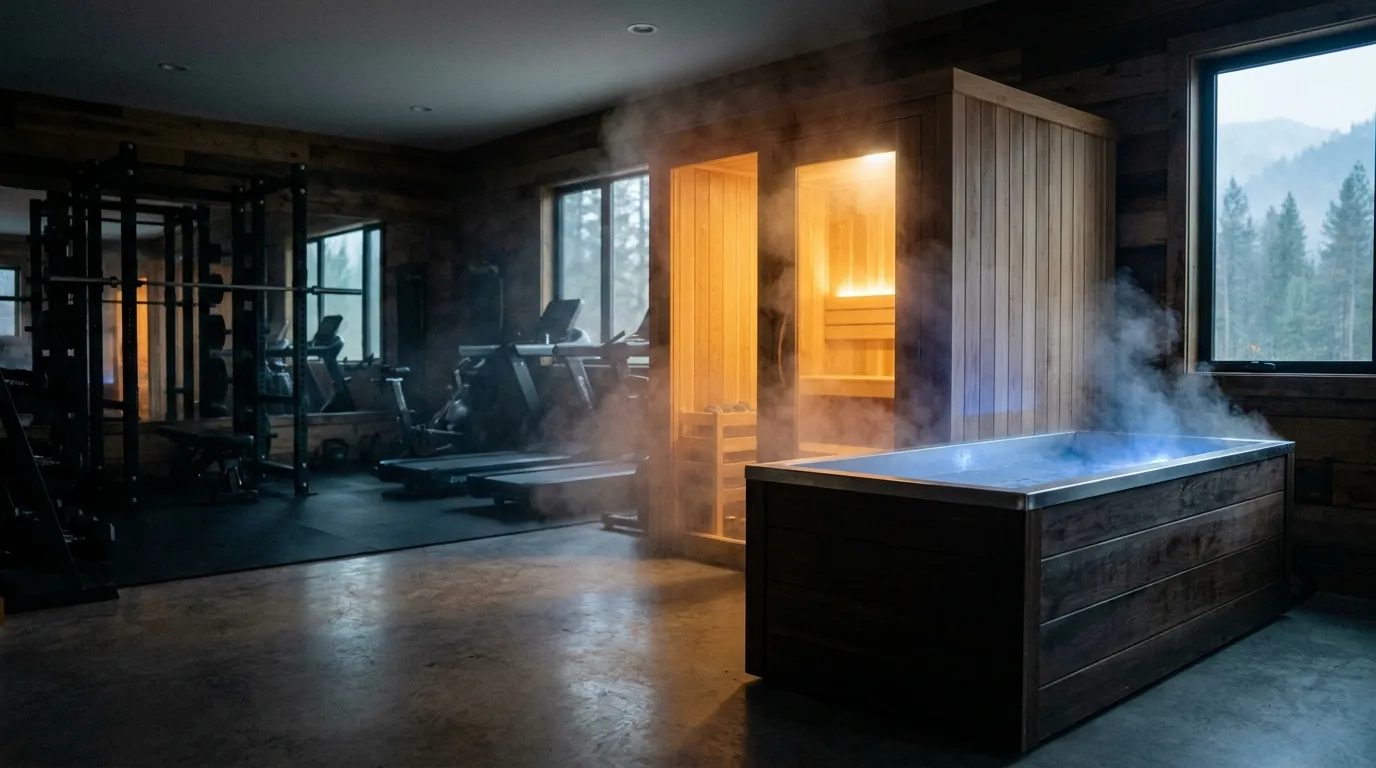
If you train, heat and cold are two of the best recovery tools you can own, but only if you time them to the result you are chasing. A sauna, done right, carries no timing penalty for any goal (Scoon et al., Journal of Science and Medicine in Sport, 2007). A cold plunge is the one where the clock matters, get it wrong after a lifting session and you can quietly work against the muscle you just trained for. This article contains affiliate links; if you buy through one, we may earn a commission at no extra cost to you. Disclosure.
The one rule most people get wrong
A cold plunge right after strength training can blunt the muscle you just worked for. In a controlled trial, regular post-lifting cold water immersion reduced long-term muscle size versus active recovery, though strength gains themselves were largely spared (Roberts et al., Journal of Physiology, 2015). A later meta-analysis of 10 studies found the strength hit, where it existed, was limited to the muscle directly worked, not a whole-body effect (Grgic et al., European Journal of Sport Science, 2022). The sauna carries no such penalty, use it any time. So the rule: if size is the goal, keep the plunge well clear of that lifting session.
Timing by goal, at a glance
The sauna column barely changes. The cold plunge column is where the goal actually decides the answer.
| Goal | Sauna timing | Cold plunge timing |
|---|---|---|
| Recovery and soreness | Any time, before or after training. Loosens tight muscles and helps you wind down. Traditional | After training, no restriction either way. Takes the edge off next-day soreness. Traditional |
| Hypertrophy and muscle size | Any time. No trial has flagged a muscle-growth penalty from heat. Traditional | Skip it right after a lifting session. Move it well clear, later the same day or a rest day both work. ProvenPMID 26174323 |
| Endurance and heat adaptation | After training, most days. Small trials found it builds plasma volume and can extend how long you hold a hard pace. ProvenPMID 16877041 | Fine straight after training. No hypertrophy-style caution applies, there is no heavy resistance signal to protect. Traditional |
Recovery and soreness: heat to loosen up, cold to take the edge off
This is where most people land, and it is the simplest case. A sauna after training loosens tight muscles and helps you wind down from the session, any time works. An ice bath after a workout is well suited to next-day soreness from cardio, conditioning or a hard class, the cold reliably takes the edge off, and on a non-lifting day there is no restriction on when you use it. The hypertrophy caveat below only applies when muscle size is what that day's training was for.
Hypertrophy and muscle size: sauna any time, cold well clear of the session
If you are lifting for muscle, the sauna genuinely does not care when you use it, no trial has found a heat-driven penalty on hypertrophy. The cold plunge is different. Roberts et al. (2015) found post-exercise cold water immersion reduced long-term muscle size compared with active recovery, and strength was largely spared, the penalty lands mainly on size. Grgic et al. (2022), a meta-analysis of 10 studies and 170 subjects, narrowed this further: where cold immersion did attenuate strength, the effect showed up only in the directly trained limb, not across the whole body. A 2024 meta-analysis in the European Journal of Sport Science also found post-exercise cold immersion attenuates hypertrophy across the pooled evidence (Piñero et al., 2024, DOI 10.1002/ejsc.12074). No trial has pinned an exact number of hours to wait, so the honest advice is to separate by goal, not by a clock: keep the plunge off that session entirely, do it earlier in the day before you lift, or push it to a rest day.
Endurance and heat adaptation: sauna after training earns its place
For runners, cyclists and anyone training for events in the heat, a sauna after a session is doing real work, not just relaxing you. A small trial of 6 male runners found 3 weeks of post-exercise sauna use, roughly 31 minutes at 89.9°C after training, around 13 sessions, raised 5K time-to-exhaustion by 32% and expanded plasma volume by 7.1% (Scoon et al., 2007). A separate trial in trained cyclists found sauna based heat acclimation after training expanded plasma volume (Stanley et al., European Journal of Applied Physiology, 2015). Both trials are small, but the direction is consistent: sauna after training, not before, is what drives the adaptation. Cold is not off-limits here the way it is for lifters; a plunge after an endurance session is fine, since there is no heavy resistance signal for it to interrupt.

Heat before training: practice, not proof Individual
A sauna before a workout is rarely the better choice, and no trial in this pack tested pre-workout heat for strength or power, so treat this as practice-based reasoning, not evidence. As a brief, mild warm-up, 5 to 8 minutes at moderate heat, before light training, mobility work or a technical session, it can raise your heart rate and loosen you up. What it should not be is your warm-up for a heavy strength session: the heat adds fatigue and fluid loss before you have lifted anything, working against the performance you are there for. If you want the heat, save the full session for afterwards and use movement, not the sauna, to warm up for lifting.
The cold side: cold plunge before or after a workout
Most guides to workout timing only cover the sauna. The cold plunge deserves the same treatment, because the timing question matters just as much, arguably more, on the cold side. A cold plunge before a workout can leave muscles stiffer and briefly reduce power output and grip strength, the opposite of what you want walking into a lifting or sprint session, so it is not something to reach for before training unless you have a specific, well-tested reason to. A cold plunge after a workout is where it earns its keep: easing soreness, lifting mood, and giving you a clean, fast way to bring your heart rate down, provided the hypertrophy caveat above does not apply that day. For the fuller picture beyond training days, our cold plunge benefits guide covers what the evidence does and does not support.

The OG Plunge Tub
A self-chilling plunge that is ready the moment you finish training, no ice to haul at 6am before a session.
from $4,990 · $4,990–$6,840 across 12 options, choose on the product page
In stock. Price is for the unit and excludes delivery.

Plunge Chill Pod
A portable pod for testing the post-workout habit before you commit to a permanent setup.
$79
In stock. Price is for the unit and excludes delivery.
Code ANNIVERSARY10 takes $7.90 off, $79 down to $71.10 at the retailer.
Runs to January 1, 2027. Codes are the retailer's to change or withdraw, so check it applies before you pay.
If the timing rule rules the plunge out on a lifting day, heat is still available to you, and it does not have to mean the whole sauna. A heated wearable puts it on one area without heating a cabin, which is the practical version on a weekday evening.
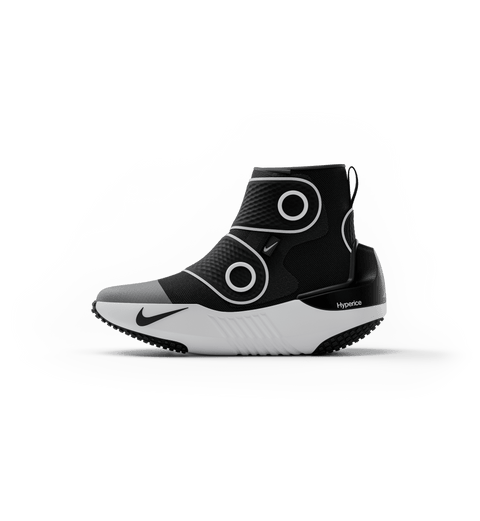
Hyperboot by Nike x Hyperice
A heated wearable for the feet and ankles, the area a sauna bench reaches last. It adds air compression alongside the heat, which is a different thing from anything measured on this page.
$899
Check current stock with the retailer. Price is for the unit and excludes delivery. This merchant's feed last updated in May 2026, so treat the price as that date rather than today's.
The 20 minute post gym protocol
If you want a routine rather than a rule to remember every time, here is the one I give clients who train regularly and want both heat and cold without turning recovery into a second workout.
Consistency matters more than the exact minutes, and it only works as a routine if the sauna is close enough to actually use after every session, which is the case for a 2-person sauna at home rather than a drive to a gym that might be busy.
Dehydration: the safety point most people skip
This is the one that actually matters. A hard workout already costs you fluid through sweat, and a sauna session on top of that costs you more, so combining the two without rehydrating is the real risk in this whole routine, more than any of the timing questions above. Do not get into a sauna dehydrated: if you finished training thirsty, lightheaded or cramping, drink first and wait. Rehydrate before the sauna, not just after, plain water covers most sessions and add electrolytes if you trained hard or for over an hour. Skip alcohol around either heat or cold work, it speeds up fluid loss and blunts the warning signs your body gives you.
What not to do after a sauna, especially post-exercise: do not skip rehydrating just because you drank during your workout, the sauna adds its own fluid loss on top. Do not go straight from the sauna into a second hard effort, your heart rate and core temperature need time to come back down. Do not drink alcohol to unwind, it works against rehydration and can mask the signs of overheating. Get out of the sauna at the first sign of dizziness or nausea, and get out of the cold plunge if you cannot control your breathing or start to feel numb rather than just cold. If you have a heart condition, uncontrolled blood pressure, or are pregnant, talk to a doctor before combining training with either heat or cold, our sauna and heart health guide covers who should check first in more detail. None of this is medical advice.
The short version
Sauna any time, any goal, it carries no timing penalty. Cold plunge after training too, unless size is the goal that day, in which case keep the cold well clear of the session rather than watching a clock. For endurance, a post-workout sauna is doing real physiological work, not just relaxing you. How often you should be doing any of this is its own question, covered in our how often should you use a sauna guide, and if you want the full contrast sequence, see our contrast therapy protocol.
Common questions
Sauna before or after a workout?
After, for almost every goal, and it never conflicts with muscle or strength gains the way cold does. For endurance work, post-workout heat supports plasma volume adaptation. Before mostly just pre-fatigues you, unless it is a brief warm-up.
Does cold after lifting hurt gains?
It can blunt muscle size; strength itself is largely spared, and where it is affected the hit lands mainly on the directly trained limb, not the whole body. Keep the plunge away from that session if size is the goal.
Can I sauna before a workout as a warm-up?
Briefly, 5 to 8 minutes, for light training or mobility work, and treat it as practice, not proof, no trial has tested pre-workout heat for strength. Skip it before a heavy strength session.
Is an ice bath after a workout good for soreness?
Yes, especially after cardio or conditioning, it reliably takes the edge off next-day soreness. Keep it away from a lifting session if you train for muscle size.
Cold plunge before or after a workout?
After, for almost everyone. Cold before can leave you stiffer with reduced power output; cold after helps soreness, mood and recovery, just not right after lifting for size.
Contrast around training?
Good for recovery and soreness after a workout, same hypertrophy caveat on the cold part. See our contrast therapy protocol for the full sequence.
What does 10 minutes in a sauna do?
Raises your core temperature, gets you sweating properly and starts the relaxation response, without the fatigue and fluid loss a longer session adds on top of a workout. A sensible default, not a minimum.
How long should you sit in a sauna?
10 to 20 minutes for most healthy adults, 10 as the default after training. Always rehydrate before and after, especially around exercise.
What not to do after a sauna?
Do not skip rehydrating, do not go straight into another hard effort, and do not drink alcohol to unwind. Get out earlier if you feel dizzy or nauseous.
Sources & method
Evidence cited above: Roberts et al., Journal of Physiology, 2015 (post-exercise cold water immersion blunts hypertrophy, strength largely spared) (PMID 26174323); Grgic et al., European Journal of Sport Science, 2023 (meta-analysis, 10 studies: cold immersion attenuates strength only on the directly trained limb, ES -0.31; whole body no significant attenuation) (PMID 35068365); Scoon et al., Journal of Science and Medicine in Sport, 2007 (post-exercise sauna, 5K time-to-exhaustion +32%, plasma volume +7.1%, 6 male runners) (PMID 16877041); Stanley et al., European Journal of Applied Physiology, 2015 (sauna based heat acclimation expanded plasma volume in trained cyclists) (PMID 25432420); Piñero et al., European Journal of Sport Science, 2024 (meta-analysis, post-exercise cold immersion attenuates hypertrophy) (source).
No randomized trial has tested a specific wait time between lifting and a cold plunge; the hypertrophy advice is to separate by goal, not to count hours. Pre-workout heat for strength is practice-based reasoning, not trial-tested, and is flagged as such above. This is general information, not medical or training advice; if you have a health condition, check with a professional before starting heat or cold work.