Cold plunge benefits, without the hype
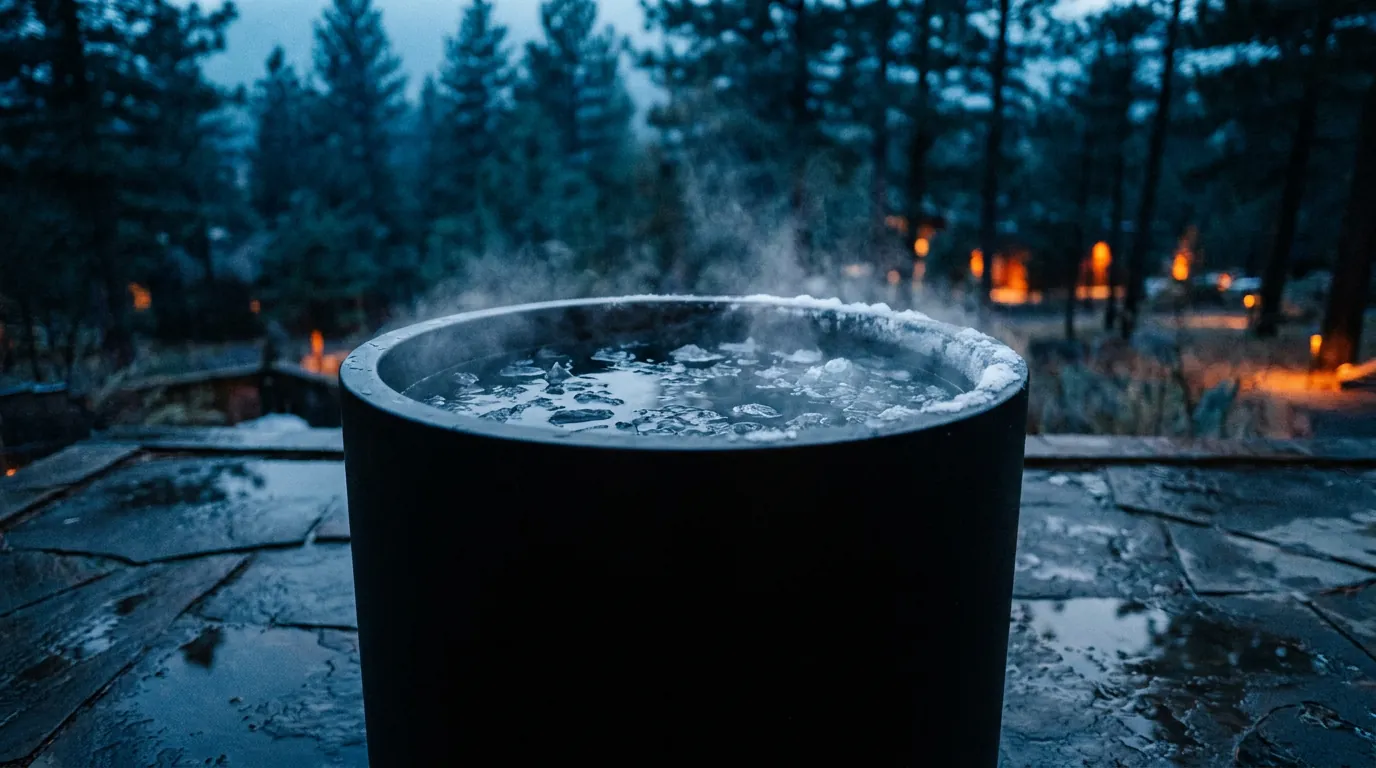
Cold plunging is sold as a fix for almost everything. Some of the claims hold up; a lot don't. As a wellbeing professional who has spent his career helping organisations manage health, stress and recovery, here's the honest version: what the research actually supports (Fox et al., Scientific Reports, 2025), what it doesn't, and how to decide whether it's for you before you spend anything. This article contains affiliate links; if you buy through one, we may earn a commission at no extra cost to you.
Every claim, graded honestly
Here is the whole picture on one screen before we get into the detail. Grades run A (strong evidence) to D (contradicted or oversold).
| Claim | Evidence grade | What the research actually says |
|---|---|---|
| Short-term mood, energy and alertness lift | B | The most reliable effect. A 2025 semi-randomised trial found greater momentary energy, clarity and stress handling than a control, but it paired breathwork with the cold, and the best-controlled trial to date found cold plus breathing no better than a warm shower plus breathing, so credit the combined ritual, not the water alone. PMID 41388053 |
| Lower stress | B | A 2025 meta-analysis of 11 trials found stress fell about 12 hours after immersion, not instantly. PMID 39879231 |
| Fewer sick days, stronger immunity | C | One large trial found 29% fewer self-reported sick days from cold showers; the 2025 meta found no change in immune markers. Mixed, mostly self-report. PMID 27631616 |
| Eases next-day muscle soreness | B | Reduces soreness in the first 24 hours (best around 11 to 15°C for 10 to 15 minutes), but the effect fades and does not clearly beat active recovery. PMID 40078372 |
| Builds muscle or speeds strength gains | D | The opposite. Cold immersion right after lifting blunts muscle growth. Keep it away from a strength session. PMID 26174323 |
| Burns fat or boosts metabolism | D | Cold activates brown fat, but this does not translate into meaningful fat loss. Oversold. |
| Treats anxiety or depression | D | A meta-analysis found only a brief stress drop and no lasting effect on mood disorders. It can help you feel better; it is not a clinical treatment. PMID 39879231 |
Cold plunge for muscle recovery, the fastest-growing reason people buy one
Searches for "cold plunge for muscle recovery" have risen sharply over the past year, and it's the main reason most of our readers are looking at a tub at all. The honest picture is more nuanced than the marketing.
- What it does. A plunge after hard training reduces perceived soreness (DOMS) over the following 24 hours. Athletes reliably report feeling less beaten up the next day.
- What it costs you. That soreness relief comes with a trade-off. Roberts et al. (J Physiol, 2015, PMID 26174323) found that cold water immersion straight after strength training attenuates the acute anabolic signalling and long-term muscle and strength adaptations you're training for. In plain terms: ice right after lifting can quietly work against the gains.
- The timing rule. If your goal is size or strength, keep the plunge away from your lifting session, do it on a separate day, before training, or after conditioning or endurance work instead. No trial has pinned an exact safe gap in hours, so ignore anyone who quotes a precise number; what is shown is that cold right after lifting blunts the adaptation, so separate the two by goal, not by a magic clock. If your goal is purely feeling less sore for tomorrow (a race, a second session, a busy week), the trade-off may be worth it.
My advisory take: most people asking about "cold plunge for recovery" aren't competitive lifters chasing hypertrophy, they're weekend athletes who want to feel human again by Monday. For that goal, a plunge is a reasonable tool. If you're in a dedicated strength block, respect the timing rule above; it's the one part of this evidence base I'd actually plan a training week around. The full goal-by-goal breakdown is in our cold plunge for muscle recovery guide.
What the evidence supports
- A real mood and energy lift. A cold-plus-breathwork routine reliably improves momentary energy, mental clarity and the sense of handling stress (Fox et al., Scientific Reports, 2025); that trial pairs the cold with breathing and can't separate the two, so credit the combined ritual, not the water alone. Most regular plungers are chasing this feeling, and it's genuine.
- Short-term soreness relief. A plunge after hard exercise reduces muscle soreness over the next 24 hours, though the effect fades after that and doesn't clearly outperform simply resting or moving gently (Wang et al., Frontiers in Physiology, 2025).
- A resilience habit. Deliberately doing an uncomfortable thing on purpose, daily, has real psychological value for many people, a training ground for staying calm under stress. That's not a lab result, but it's a legitimate reason people keep at it. In my experience advising on workplace wellbeing, the people who stick with cold exposure long-term are chasing consistency, not intensity, colder and longer isn't the goal.
Cold plunge benefits for women
This is a fast-growing search, and it deserves a straight answer rather than a repackaged version of the men's section. We cover it in full in the cold plunge for women guide; the short version:
- What's actually studied. The core cold-immersion benefits, mood lift, transient stress reduction, short-term soreness relief, aren't shown to differ meaningfully by sex. The problem is that most of the underlying trials, including the muscle-recovery research cited on this page, have skewed heavily male. There isn't a large body of women-specific dosing or outcome data yet.
- Hedge honestly. Treat claims that cold plunging specifically balances hormones, fixes perimenopause, or boosts metabolism for women as marketing, not evidence. The one controlled trial in midlife women found cold plus breathing was no better than a warm shower plus breathing for mood. What's real is the same short-term mood and recovery effect everyone gets.
- Cold-shock and pregnancy caution. The cold shock response (a sharp spike in heart rate and blood pressure on entry) applies to everyone, but pregnancy adds real uncertainty around circulation and thermoregulation that hasn't been studied for cold immersion. Anyone who is pregnant, trying to conceive, or has a cardiovascular condition should talk to a doctor before starting, not after.

Why athletes take ice baths
Strip away the branding and it comes down to three things: less next-day soreness so they can train again sooner, a genuine mental edge (the "I did something hard" mindset before competition), and, for some, a numbing effect on acute joint or tendon flare-ups after a heavy session. None of that means colder or longer is better, and the muscle-growth trade-off above applies just as much to athletes as to anyone else.
Cold plunge vs ice bath, same thing?
Functionally, yes. "Ice bath" traditionally means a tub, barrel, or trough filled with cold water and bags of ice, the low-cost, high-effort version. "Cold plunge" has come to mean a self-chilling tub with a built-in compressor and filter that holds a set temperature without a daily ice run. The water is the same, the physiology is the same, the benefits above apply equally either way. The difference is entirely about convenience and cost, not results.
What a plunge does, minute by minute
- On entry (seconds). The cold shock response fires: an involuntary gasp, a sharp jump in heart rate and blood pressure, and the urge to hyperventilate. This is the point of real risk and the reason breathing control and never plunging alone as a beginner both matter.
- Early minutes. Breathing settles, blood vessels near the skin constrict to protect core temperature, and the intense discomfort typically eases as attention and focus sharpen.
- After you get out. Blood flow returns to the skin, there's a noticeable lift in alertness and mood that can last for a while afterward (Fox et al., 2025), and, over the following day, reduced soreness if the plunge followed hard exercise, with the muscle-growth caveat above.
We're not going to invent numbers for exact heart-rate spikes or core-temperature drops here, they vary by person, water temperature and immersion depth. What's consistent is the shape of the response: sharp shock, settle, lift.
How cold, how long
Most people get the mood and soreness benefits in the 50 to 59°F range for 2 to 5 minutes. Colder or longer hasn't been shown to work better and adds real safety load, especially while you're still learning your own response. A sensible way to start, then build:
- Weeks 1 to 255 to 60°F1 to 3 min
Get out the moment your breathing stops settling. The first goal is control, not cold.
- Weeks 3 to 450 to 55°Fup to 5 min
Only drop the temperature once the first band feels genuinely easy.
- Ongoing38 to 50°F2 to 5 min
About 11 minutes a week across two to four sessions is plenty. Colder and longer is not better.
For the full temperature-by-goal breakdown, see our cold plunge temperature guide.
What it doesn't do (despite the claims)
- It doesn't treat depression or anxiety. A 2025 meta-analysis of eleven trials found stress fell about twelve hours after immersion but there was no lasting effect on mood disorders. Cold water can help you feel better; it is not a clinical treatment.
- It can work against muscle growth. As above, plunging straight after strength training may blunt the very adaptations you trained for (Roberts et al., J Physiol, 2015). If you lift for size or strength, separate the plunge from the session.
- It's not a metabolism or immunity miracle. Cold does activate brown fat and one trial found fewer self-reported sick days, but a 2025 meta-analysis found no change in immune markers, and brown fat activation does not translate into meaningful fat loss. Enjoy the plunge for what it reliably delivers, and be sceptical of the rest.
Safety first
Cold immersion triggers a "cold shock response", a sharp, brief spike in heart rate and blood pressure that is the riskiest moment. If you have a heart condition, high blood pressure, or are pregnant, get medical advice before you start. Never plunge alone as a beginner, never after alcohol, and get out if you feel faint, chest-tight, or can't control your breathing. This is information, not medical advice.
If you want to try it
Don't spend $5,000 to find out whether you like it. Start with a portable ice bath and a few bags of ice, follow the temperatures and timing in our protocol guide, and give it a month. If it sticks, that's when a chiller tub earns its price, buy once, use it for a decade, instead of paying $30 to $60 a visit at a studio.

Plunge Chill Pod
A portable ice bath pod, the low-cost way to test whether these benefits are worth it to you.
$79
In stock. Price is for the unit and excludes delivery.
Code ANNIVERSARY10 takes $7.90 off, $79 down to $71.10 at the retailer.
Runs to January 1, 2027. Codes are the retailer's to change or withdraw, so check it applies before you pay.
If it's stuck, here's the daily option
A tub that chills itself, for getting these benefits without a daily ice run.

The OG Plunge Tub
A self-chilling cold plunge you can use daily, the practical way to get these benefits at home.
from $4,990 · $4,990–$6,840 across 12 options, choose on the product page
In stock. Price is for the unit and excludes delivery.
FAQ
What are the proven benefits of cold plunging?
A short-term lift in mood, energy and alertness, a transient reduction in stress, and eased muscle soreness in the first 24 hours after exercise. Claims of curing anxiety or depression, burning meaningful fat, or reliably beating other recovery methods, aren't supported.
Does cold plunging help muscle recovery?
It reduces next-day soreness, but the effect fades within a day. Cold immersion right after strength training can blunt muscle and strength gains, so keep the plunge away from that session if you lift for size or strength.
Is a cold plunge the same as an ice bath?
Functionally yes. An ice bath is usually a tub chilled with bagged ice; a cold plunge is often a self-chilling tub. The water, the physiology and the benefits are the same either way.
Are the benefits different for women?
The core benefits don't appear to differ by sex, but most trials have skewed male, so women-specific dosing isn't established. Anyone who is pregnant or has a heart condition should get medical advice first.
How cold should a plunge be and how long should I stay in?
Most people get the benefits from 50 to 59°F for 2 to 5 minutes. Colder and longer isn't proven to work better and raises the safety load.
Is cold plunging safe?
For most healthy adults, used sensibly, yes. The cold shock response briefly spikes heart rate and blood pressure, which is risky for people with heart conditions. Anyone with cardiovascular disease, high blood pressure, or who is pregnant should get medical advice first, and no one should plunge alone as a beginner or after alcohol.
Sources & method
Evidence cited above: Fox et al., Scientific Reports, 2025 (breathwork and cold immersion, momentary mood and energy) (PMID 41388053); Cain et al., PLOS One, 2025 (meta-analysis of 11 trials, stress and immune markers) (PMID 39879231); Buijze et al., PLOS One, 2016 (cold showers and self-reported sick days) (PMID 27631616); Wang et al., Frontiers in Physiology, 2025 (55-trial network meta-analysis, recovery dosing) (PMID 40078372); Roberts et al., J Physiology, 2015 (cold immersion after strength training) (PMID 26174323).
Based on published clinical research (cited above) and our own review of the evidence, not manufacturer marketing claims. Grades reflect the weight of human evidence. This page is updated as new research is published. Nothing here is medical advice.