The contrast therapy protocol
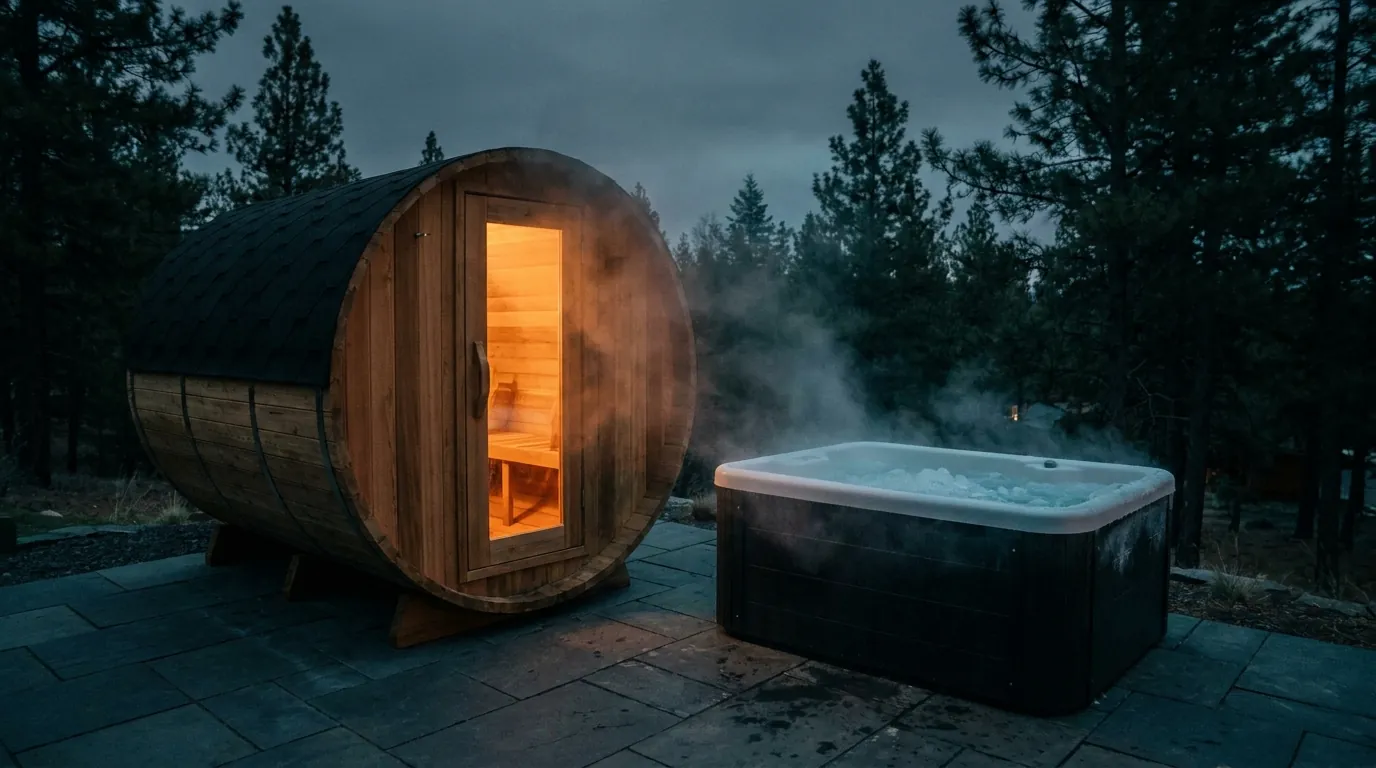
As a wellbeing advisor who has spent his career helping organizations manage stress, health and recovery, sauna and cold plunge is the pairing I recommend most, not as two hobbies but as one practice. Heat, then cold, in rounds, is where the ritual lives, and it draws on some of the best-supported wellness evidence there is: a 20 year Finnish cohort tying frequent sauna use to a 63 percent lower risk of sudden cardiac death (Laukkanen et al., JAMA Internal Medicine, 2015), alongside cold's well documented short-term lift in mood and alertness. This guide covers what contrast therapy actually is, the order, the numbers, and an honest read of what the science does and doesn't say. Some links below are affiliate links, they never change what I recommend, see our disclosure.
What is contrast therapy?
Contrast therapy is the practice of alternating heat and cold on purpose, in this case sauna heat followed by a cold plunge, in short, repeated rounds. The idea is to deliberately swing your body between two states: heat that dilates blood vessels, relaxes muscle and drops your guard, then cold that snaps vessels shut and delivers a short, sharp jolt of alertness. In the clinical literature it is sometimes called contrast water therapy (Bieuzen et al., PLOS ONE, 2013); outside a lab it just means a sauna and a cold plunge, used together, in a set order.
It isn't the same as either one alone. A sauna session on its own is one long, steady exposure; a cold plunge on its own is one short, sharp one. Contrast therapy stacks both into the same session on the theory that switching between them compounds the benefit. As the next section covers honestly, that specific claim doesn't hold up well under study. What's well established is that heat and cold, done regularly, each carry real benefits on their own, and doing them back to back, in order, is simply the most efficient way to get both into one session, which is exactly why sauna and cold plunge searches have grown so fast together: people are buying the ritual, not chasing a lab result.
The order: heat, then cold
The convention, and the more comfortable way to start, is sauna first, then the plunge. Heat relaxes muscles and opens you up; the cold then delivers the sharp, alerting finish. What you end on sets how you feel afterwards: finish cold to feel energised and clear-headed; finish warm to feel relaxed and ready for sleep. There's no single "correct" order, choose by the outcome you want. For the full temperature-by-type breakdown, traditional versus infrared, and the exact numbers behind the longevity research, see our sauna temperature guide.
The protocol, in numbers
One round looks like this. Repeat it two or three times for a full session, and scale everything down if you're new.
| Phase | Temperature | Time | Notes |
|---|---|---|---|
| Sauna | 150–195°F (65–90°C) | 10–20 min | Until you’re properly warm and sweating, not until you’re dizzy. |
| Cold plunge | 50–59°F (10–15°C) | 1–3 min | Colder and shorter as you adapt. Keep breathing slow and controlled. |
| Rest | Ambient | 2–5 min | Let your body reset before the next round. Don’t rush it. |
Frequency: two or three full sessions a week is a sensible, sustainable target. More isn't automatically better. Note the 1–3 minute cold time is the common wellness convention, recovery studies often used longer immersions (10–15 minutes at 5–15°C), so treat the short version as comfort-led, not a clinical dose. For the full temperature-by-goal breakdown, mood versus recovery versus a beginner's ladder, see our cold plunge temperature guide.
Contrast therapy benefits, graded honestly
Here's where we part company with the hype. Search "contrast therapy benefits" or "sauna and cold plunge benefits" and most of what comes back oversells a magic synergy that doesn't hold up. The individual effects of heat and cold are real and studied; the specific claim that alternating them beats either alone is not. Here's what the research actually supports:
- Sauna and the heart, the strongest evidence. In a 20-year Finnish cohort study, using a sauna 4–7 times a week tracked with roughly half the cardiovascular death rate of once-weekly use (Laukkanen et al., JAMA Internal Medicine, 2015). It's an association, not proof of cause, but it's a strong, dose-dependent one.
- Cold water and mood, real but limited. Cold immersion reliably gives a short-term lift in energy, clarity and stress-handling (Fox et al., Scientific Reports, 2025). It is not a treatment for clinical anxiety or depression, a 2025 meta-analysis of 11 trials found only a brief drop in stress and no lasting effect on mood. Anyone selling it as a cure is overselling.
- Cold and muscle recovery, mixed, with a catch. Cold immersion eases soreness in the first 24 hours but the effect fades and doesn't clearly beat active recovery, and done right after strength training it can blunt muscle and strength gains (Roberts et al., J Physiol, 2015). If you lift for size or strength, keep the plunge away from your session.
- Is contrast better than either alone? Not proven. A meta-analysis found alternating hot and cold no better than cold immersion by itself (Bieuzen et al., PLOS ONE, 2013). The case for contrast therapy is the ritual and the separate merits of heat and cold, not a magic synergy. Do it because you feel better for it.
What I'd tell a client weighing this. I recommend the pairing anyway, and not because the evidence claims a synergy it doesn't have. The reason is adherence: a fixed heat-then-cold ritual, same order, same rough timing, two or three times a week, is one of the easiest health habits I've seen people actually keep for years, precisely because it doesn't ask you to decide anything once you're in the room. You get the real, separately-proven benefits of heat and of cold, wrapped in a structure that makes you show up. That's a psychological win, not a physiological one, and it's a legitimate reason to build the ritual even though the lab hasn't proven the sum beats the parts. If you're deciding which to buy first on a tighter budget, our sauna vs ice bath comparison breaks down the individual case for each.
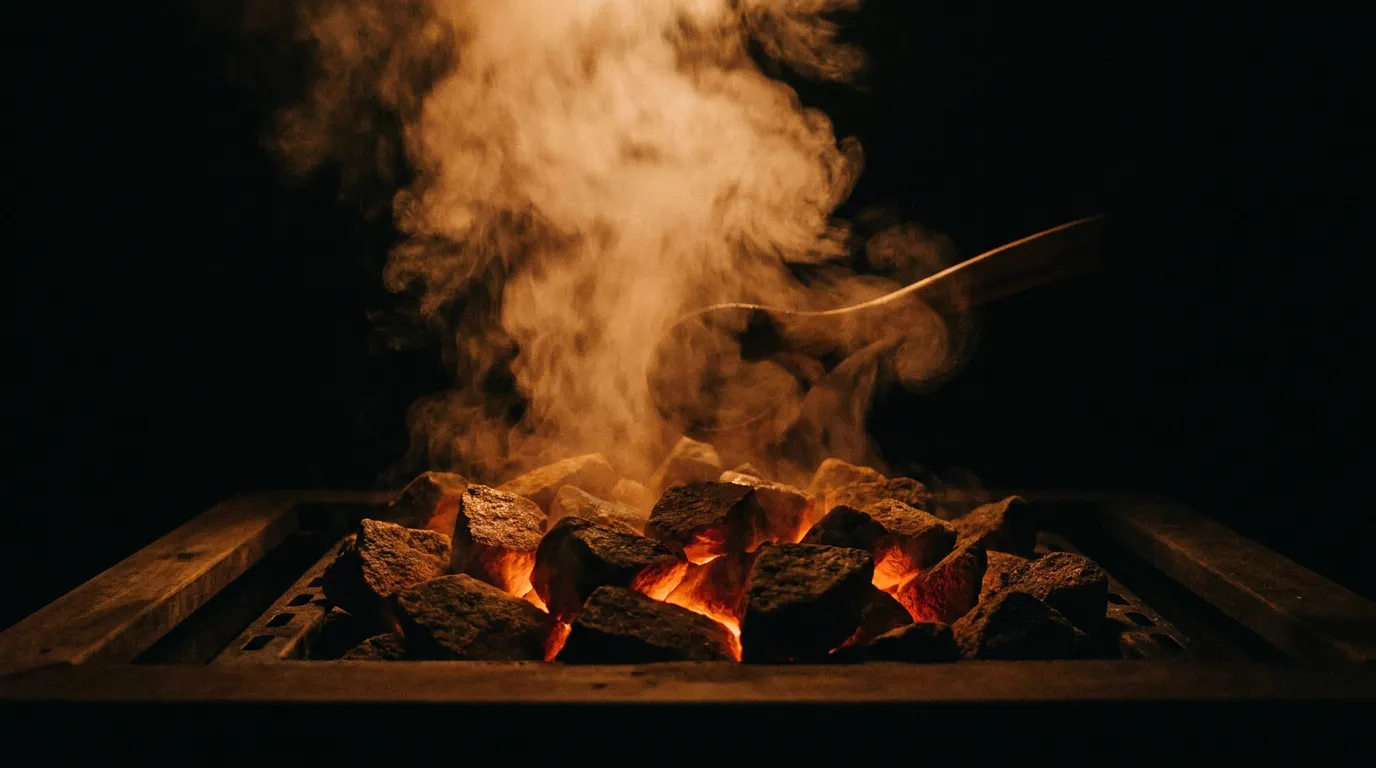
At home versus a recovery studio
Once people commit to the ritual, the next question is where to do it. Walk-in recovery studios and spas that offer a sauna and cold plunge combination typically charge $30 to $60 a session, sometimes bundled into a monthly membership. That's a fair price for trying contrast therapy before you buy anything, and a sensible way to find out whether the routine actually sticks before you spend on equipment.
The economics flip once you know it does. Twice a week at $30 to $60 a visit is $3,120 to $6,240 a year, every year, for as long as you keep going. A home setup at the lower end of the range, an apartment-friendly infrared blanket paired with an ice-filled barrel, starts around $1,850, so twice-weekly studio spend alone covers it inside the first year. A full outdoor sauna and cold plunge pairing costs more upfront but is built to last a decade or more, so the studio-year cost keeps compounding against it long after a home setup has paid for itself. After that, you're paying pennies in electricity a session instead of a spa bill, and you're not booking around someone else's opening hours. Work out the exact running cost for your own setup, sauna size, plunge type and your local electricity rate, in the cost-to-run calculator.
Safety, read this before your first round
Rapid heat-to-cold shifts put real load on the heart. Do not start contrast therapy without medical advice if you have a heart condition, high or low blood pressure, or are pregnant. Never plunge alone as a beginner, never after alcohol, and get out if you feel faint, chest-tight, or unable to control your breathing. This guide is information, not medical advice.
Two ways into the ritual, two products or one shell
Once you're committed to the ritual, there are exactly two ways to buy the gear, and neither is wrong, they just trade differently on flexibility and budget.
Two matched products
Buy a sauna and a cold plunge separately, each sized to your space and budget, then run them side by side. It's the more flexible route: you can start with one half and add the other later, upgrade either independently, and it's usually the cheaper way to the same total capability. We've paired every combination we sell by budget, from an apartment starter to a full outdoor rig, with the combined price and running cost for each.
Combined pricing, running cost and our picks at four budgets.

The OG Plunge Tub
The cold half of the ritual, in stock now, a self-chilling plunge ready without hauling ice.
from $4,990 · $4,990–$6,840 across 12 options, choose on the product page
In stock. Price is for the unit and excludes delivery.

The Sweat Barrel (2-6 Person)
The heat half of the pair, in red cedar, sized 2 to 6 person. Contrast needs both sides; the from-price is the shell, so add a heater to get the steam and rocks.
from $4,795 · $4,795–$9,895 across 36 options, choose on the product page
Made to order, 5-week lead time stated by the retailer. Price is for the unit and excludes delivery.

Cold Plunge Tub with Chiller
The budget cold half, a chiller and tub bundle that ships this week.
$569
In stock. Price is for the unit and excludes delivery.
Code ANNIVERSARY10 takes $56.90 off, $569 down to $512.10 at the retailer.
Runs to January 1, 2027. Codes are the retailer's to change or withdraw, so check it applies before you pay.
Contrast on one joint, without a sauna or a tub
Everything above works on the whole body, which is the point of the ritual. If what you actually want is heat and cold on one knee or one shoulder, a wearable that does both is a far smaller decision, and it travels. This is the honest middle ground for someone rehabbing a single joint rather than building a recovery habit around whole body immersion, and for anyone who wants to feel the heat to cold swing before committing the space and the money to a tub.
Be clear about what it is not: a targeted wrap does not reproduce the systemic response covered above, the vessel-wide flush that comes from immersing your whole body. Treat it as joint care and convenience, not as a cheaper version of the protocol on this page.
We are not recommending a specific one-device wearable here. The model we tracked has been superseded by its maker, and we will not point you at a replacement we have not checked. The two-wrap route below does the same job with products that are actually in stock.
The cheaper way: two wraps instead of one device
A single device that does both is the tidy answer, but it is not the only one. Buy a heat wrap and a cold wrap for the same body part and you can run the same alternation for less, at the cost of swapping one for the other between rounds. The heated Venom wraps use a battery rather than a plug, so the heat half is not tethered to a socket, and the cold wraps are the ones already covered on our muscle recovery guide.
Be honest with yourself about the swap. The protocol above works because the change from hot to cold is quick and repeated. Two separate wraps make that a manual job each round, which is fine at home and irritating anywhere else. If you know you will not bother, the one device is the one you will actually use.
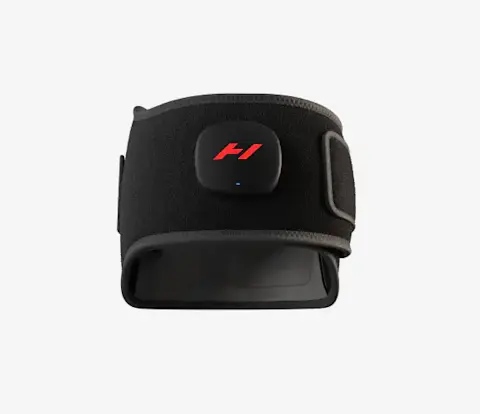
Venom 2 Back
A heated back wrap with vibration, HyperHeat element, the heat half of a two wrap setup for the lower back.
$269
Check current stock with the retailer. Price is for the unit and excludes delivery. This merchant's feed last updated in May 2026, so treat the price as that date rather than today's.
One shell
Or buy a single pre-built unit with the sauna and the cold plunge built into one shell, delivered as one piece. It's the priciest way into the ritual and the least hassle: no matching two makers and no second footprint. Check the warranty before you assume it covers both halves: Sweat Kingdom publishes a three-year sauna warranty whose document does not mention cold plunges at all.
Sweat Kingdom SK Contrast
Sauna + plunge, one unit
Confirm stock and lead time with the retailer. Price is for the unit and excludes delivery.
- Build
- Traditional sauna + cold plunge in one pre-built shell
- Sizes
- 8x10 / 8x12 / 8x16 ft
- Sauna
- Traditional, 170-195°F
- Plunge
- Integrated cold plunge with chiller + filtration
- Power
- Sauna 50A hardwired (6-3); plunge 20A
- Options
- Optional integrated shower (+$2,500)
- Warranty
- 3-year
Buy it if, you'd rather write one check, take one delivery and deal with one supplier than match and order two separate products yourself.
Watch out, it needs two dedicated circuits, a 50A hardwired feed for the sauna and a 20A feed for the plunge, so price an electrician before you buy, and it's the biggest single spend on this page.
Common questions
Should you do sauna or cold plunge first?
The usual order is sauna first, then cold plunge, heat to loosen and relax, then cold to finish. Ending on cold leaves you alert; ending on heat leaves you relaxed and ready for sleep. Both are valid; pick by whether you want to feel energised or wound down afterwards.
How long should a contrast therapy session be?
A typical round is 10–20 minutes in the sauna, 1–3 minutes in the cold, then a short rest, repeated two or three times. Total sessions run 30–60 minutes. Start with one round and build up.
Is contrast therapy safe?
For most healthy adults, used sensibly, yes. But rapid heat-to-cold shifts stress the cardiovascular system, so anyone with a heart condition, high blood pressure, or who is pregnant should speak to a doctor first. Never do it alone if you're new, and never after alcohol.
How much does contrast therapy cost at a studio versus at home?
A walk-in sauna and cold plunge session at a recovery studio or spa typically costs $30 to $60. Twice a week, that is $3,120 to $6,240 a year, indefinitely. A home setup starts around $1,850 for an apartment-friendly pairing, so twice-weekly studio spend alone covers that cost inside the first year, and a home ritual then costs only pennies in electricity per session for years afterwards.
Do I need a separate sauna and cold plunge, or is one all-in-one unit enough?
Either works, it comes down to footprint and budget. Two separate, matched products, a sauna and a cold plunge sized to your space, is the more flexible and usually cheaper route, and it is what most people buy. A single pre-built unit with both built in trades that flexibility for one delivery and one supplier at a higher starting price. Neither is more effective, the ritual works the same either way.
Sources & method
Evidence cited above: Laukkanen et al., JAMA Internal Medicine, 2015 (sauna and cardiovascular death) (PMID 25705824); Roberts et al., J Physiology, 2015 (cold immersion after strength training) (PMID 26174323); Bieuzen et al., PLOS One, 2013 (contrast water therapy meta-analysis, high risk of bias) (PMID 23626806); Fox et al., Scientific Reports, 2025 (breathwork and cold, mood and stress) (PMID 41388053).
No 2022 to 2026 contrast-specific meta-analysis exists beyond Bieuzen 2013, whose trials were all high risk of bias, so the case for contrast is the ritual and the separate merits of heat and cold, not a proven synergy. Studio pricing is a typical US range, not a specific competitor's rate. Product prices and specs are Sweat Kingdom's own, current July 2026, use the retailer link for live pricing. This guide is information, not medical advice.