Sauna vs ice bath, and why the evidence for each isn't equal
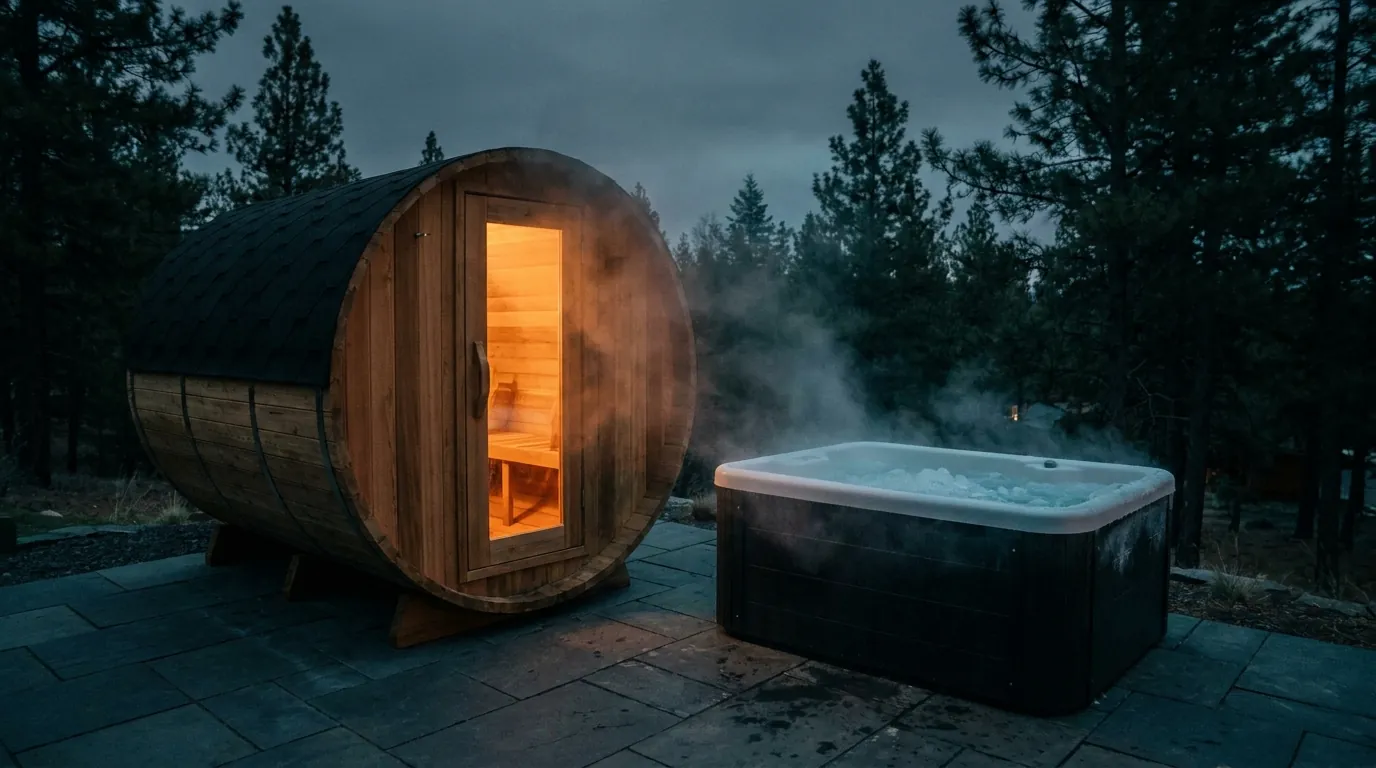
People ask this like one wins. It doesn't, and the two also do not have the same weight of evidence behind them, which most comparisons quietly skip past. As a wellbeing advisor who has spent his career helping organisations manage health, stress and recovery, the first question I ask a client weighing this up is what they are actually trying to change, long-term heart health, or how sore or wired they feel this week. A 20.7-year Finnish cohort ties frequent sauna use to lower cardiovascular and all-cause mortality (Laukkanen et al., JAMA Internal Medicine, 2015), a finding since extended to both men and women (Laukkanen and Laukkanen, BMC Medicine, 2018). Nothing that size or that long exists for cold water immersion. Here is the honest comparison, what each actually does, what it costs, and why most people who start with one end up owning both. This article contains affiliate links, if you buy through one we may earn a commission at no extra cost to you.
Sauna vs ice bath, side by side
One screen, the whole comparison, including the part most sites leave out: the evidence behind each claim is not the same kind of evidence.
| Sauna | Ice bath | |
|---|---|---|
| Evidence type | 20.7-year cohort, tracked mortality outcomes | Acute recovery and immune-marker trials, no mortality cohort |
| Primary benefit | Lower cardiovascular and all-cause mortality with frequent, regular use | Short-term mood and alertness lift, eased next-day soreness |
| Contraindications | Pregnancy, acute cardiovascular events, fever | Cardiovascular disease, uncontrolled high blood pressure, pregnancy, Raynaud's |
| Best for | The long game, heart health tracked over decades | Right now, today's soreness, today's mood |
The evidence isn't equal, and that's the point
Say this plainly, because most comparison pages blur it: sauna has roughly two decades of cohort data tracking real deaths, not just markers. A 2,315-man, 20.7-year Finnish cohort found 4 to 7 sauna sessions a week tracked with a lower risk of sudden cardiac death, fatal coronary disease and all-cause mortality than once a week (Laukkanen et al., 2015), and a separate cohort of 1,688 men and women found the same frequency and duration relationship held for both sexes, adding predictive value beyond the standard cardiovascular risk factors (Laukkanen and Laukkanen, BMC Medicine, 2018). That is a mortality outcome, tracked for decades, dose dependent, in both sexes.
Cold water immersion has nothing that matches it. There is no equivalent decades-long cohort tying regular ice baths or cold plunging to lower mortality, and we are not going to invent one or imply that one exists. What cold does have is real, repeatable evidence at a shorter horizon: a reliable short-term lift in mood and alertness, and eased soreness in the first 24 hours after hard exercise. Both are genuine effects, worth having, but they are a different scale of claim to a mortality cohort. If a site tells you cold plunging is "as proven" as sauna for long-term health, that is the tell that it hasn't checked the actual literature.
Why people end up wanting both
Once you see the evidence isn't equal, the reason people buy both stops looking contradictory. They are not buying the same claim twice, they are buying two different cases.
- Heat is the longevity case. You use a sauna regularly for the same reason you exercise regularly, the payoff shows up in a mortality cohort over years and decades, not in how you feel walking out today.
- Cold is the recovery case. You use an ice bath for the payoff this week: a sharp mood and energy lift, and less soreness tomorrow after a hard session. Cold right after strength training can blunt the muscle and strength gains you just trained for, so keep it away from that specific session (Roberts et al., J Physiol, 2015).
- Owning both covers both timeframes. There isn't strong proof that alternating the two beats cold immersion alone, a meta-analysis found contrast water therapy no better than cold on its own. People who own both aren't chasing a proven synergy, they're covering the long game and the short game with one tool each.
Who shouldn't do either
This is not the section to skim. Cold is contraindicated if you have cardiovascular disease, uncontrolled high blood pressure, are pregnant, or have Raynaud's, the cold shock response spikes heart rate and blood pressure sharply on entry. Heat is contraindicated if you are pregnant, have had a recent acute cardiovascular event, or have a fever. If any of that applies to you, get medical advice before starting either one, not after. This page is information, not medical advice.
What each actually costs to own
The sticker price is the smallest part of the decision. Here's what each route costs to buy and to run, worked out in full in our home sauna cost guide and the cost-to-run calculator, where you can plug in your own electricity rate.
| Type | Buy | Run |
|---|---|---|
| Infrared sauna cabin | $2,500 – 8,000 | $20 – 30 a year at 3 sessions a week |
| Barrel sauna | $4,000 – 6,700 | $140 – 220 a year at 3 sessions a week |
| Insulated cabin sauna | $8,000 – 15,000 | about $150 a year at 3 sessions a week |
| Ice tub (bagged ice) | $150 | no electricity, cost is your time and bagged ice |
| Chiller cold plunge | from $4,990 | $85 – 240 a year, roughly $7 to $20 a month |

Which to buy first
Cold, almost always, because it's cheap to try. A portable ice bath and a few bags of ice cost under $200 and tell you within a month whether you'll keep it up. A sauna is a $4,000+ installation you don't want to commit to on a hunch. Prove the habit with cold, then add heat for the longer-term case.

Plunge Chill Pod
Cheap, portable and ships now, the cold side of this decision without waiting on a sauna install.
$79
In stock. Price is for the unit and excludes delivery.
Code ANNIVERSARY10 takes $7.90 off, $79 down to $71.10 at the retailer.
Runs to January 1, 2027. Codes are the retailer's to change or withdraw, so check it applies before you pay.
Order of operations, if you're doing both
Once you own both, the convention is sauna first, then cold. Heat loosens you up; cold delivers the sharp finish. What you end on decides how you feel afterward, worth knowing if you're doing this in the evening.
Why most people end up with sauna and cold plunge
If that's the direction you're heading, the cheapest way in isn't buying a sauna and a cold plunge separately and hoping they match, it's a package built to pair from the start, sized to the same space and the same power. We've matched four budgets, from an apartment-friendly setup to a full outdoor ritual, in our sauna and cold plunge packages guide.
The gear to start with
Cheaper to try than a full sauna, and a heat pairing from the same maker for whenever you're ready for both.

The Sweat Barrel (2-6 Person)
The cheapest real heat to pair with it, a red cedar barrel sauna from the same maker, from $4,795.
from $4,795 · $4,795–$9,895 across 36 options, choose on the product page
Made to order, 5-week lead time stated by the retailer. Price is for the unit and excludes delivery.

The OG Plunge Tub
An in-stock cold plunge that chills and filters itself, the ice bath side without the ice run.
from $4,990 · $4,990–$6,840 across 12 options, choose on the product page
In stock. Price is for the unit and excludes delivery.
Common questions
Is sauna or ice bath better?
They are not competing for the same evidence base, so neither. Sauna use is tied to lower cardiovascular and all-cause mortality in a 20.7-year cohort, real long-term outcome data. An ice bath gives a sharp, short-term lift in mood and alertness and eases next-day soreness, but there is no equivalent long-term mortality study for cold, that evidence is acute and immune-marker only. Pick by the goal, not by which one "wins."
Should I get a sauna or ice bath first?
Start with cold. A portable ice bath costs a fraction of a sauna and tells you quickly whether the habit sticks. A sauna is the bigger, more permanent installation, worth it once you know you'll use it.
Is a cold plunge the same as an ice bath?
Functionally, yes. Ice bath usually means a tub or barrel you chill with bagged ice; cold plunge usually means a self-chilling tub with a built-in chiller. Same cold water, same physiology, same benefits, the difference is convenience and cost, not results.
Who shouldn't do a sauna or an ice bath?
Get medical advice first. For cold: cardiovascular disease, uncontrolled high blood pressure, pregnancy, or Raynaud's. For heat: pregnancy, a recent acute cardiovascular event, or a fever.
Is sauna and cold plunge together better than either alone?
Not provably, no trial shows alternating heat and cold beats cold immersion on its own. What is real is that most people enjoy the ritual more, and owning both means the right tool for whatever you're trying to change that day.
Sources & method
Evidence cited above: Laukkanen et al., JAMA Internal Medicine, 2015, a 20.7 year Finnish cohort of 2,315 men (PMID 25705824); Laukkanen and Laukkanen, BMC Medicine, 2018, 1,688 men and women, frequency and duration linearly reduce CVD mortality (PMID 30486813); Roberts et al., J Physiology, 2015 (cold immersion after strength training) (PMID 26174323).
Buy and running costs from our home sauna cost guide and cost-to-run calculator, current July 2026. No cohort study of comparable size or duration exists for cold water immersion, we are not going to imply one does. Nothing on this page is medical advice.