How much a home sauna really costs, all in
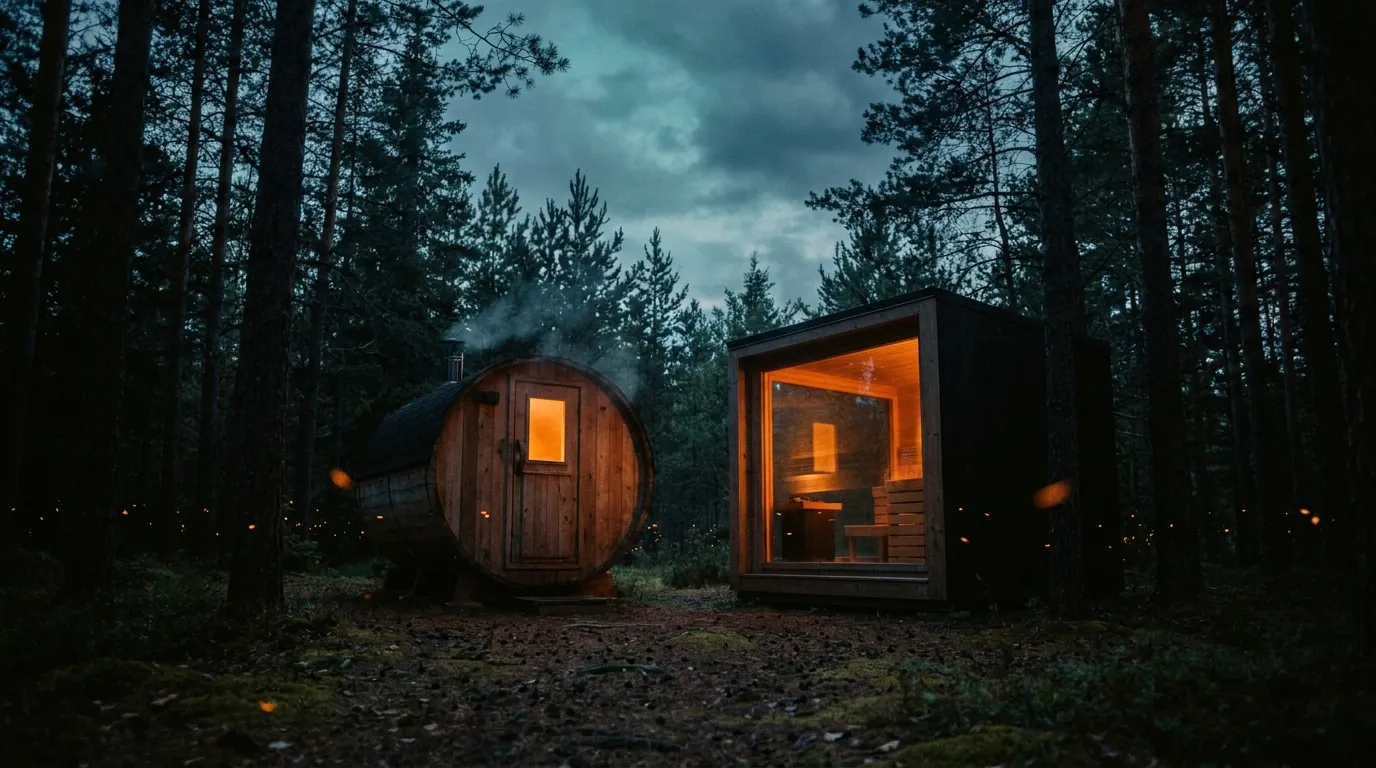
A home sauna is a daily wellness habit you buy once, heat therapy for stress, recovery and sleep, on your own schedule, for less per session than the spa you keep meaning to visit. Getting the price right matters more than the pitch, because the honest answer to "how much" is "more than the sticker." The number on the product page is the unit only. What actually leaves your account is the unit plus the electrical, the base, and the delivery, and those add-ons are exactly what most cost breakdowns leave out. Here is the all-in cost by type, so you compare like for like. Some links below are affiliate links, they never change what I recommend, see our disclosure.
All-in cost by sauna type
Every roundup quotes the unit price. Here is the unit stacked against what actually gets it installed and running, one bar per type, so you can see where the money really goes.
What gets added on top of the unit
240V circuit. A traditional heater over about 4.5kW needs a dedicated 240V circuit. Budget $800 to $2,500 for a licensed electrician, materials and the permit on a typical run, and up to about $3,000 for a detached outdoor sauna, because what drives this cost is the distance from your panel and whether it has spare capacity. A panel upgrade is not inside that figure. If your service is already full, national cost aggregators put that job at roughly $1,300 to $2,500 on its own, quoted separately by your electrician. Indoor infrared cabins that plug into a standard 120V outlet skip this entirely, which is the single biggest reason they are often cheaper all in than a barrel that looks cheaper on paper.
Pad or base. An outdoor barrel or cabin needs a level, stable base. A poured concrete pad runs $800 to $2,000. A paver or gravel base is the budget route at $300 to $800, and is often fine if your climate and the maker's warranty terms allow it, check before you pour or skip concrete.
Delivery and assembly. Plain freight for a barrel or cabin is typically $150 to $500 on its own. Add professional assembly and the full line runs $300 to $2,500, low for a barrel you can bolt together yourself, high for a larger kit that needs a crew to panelize on site.
What it costs to run, not just to buy
The type you choose keeps costing you every session, and the gap is wide. A traditional 6kW heater costs about $0.90 to $1.40 a session; an infrared cabin, which warms your body rather than a whole room of air, costs about $0.12 to $0.18, at the US average residential electricity rate of 18.83 cents per kWh (EIA, April 2026). At a few sessions a week that gap is pocket change; at four to seven sessions a week, the frequency the wellbeing research keeps rewarding, it adds up to real money over a year. Put in your own rate and how often you will actually use it below.
US residential average is ~$0.19/kWh, change it to your rate for a real number.
Chiller cost is driven by cooldown and standby across the day, not your minutes in the water, so plunging more often barely moves the bill.
Estimate based on typical power draw and your inputs. Real cost varies with insulation, ambient temperature, and standby behavior.
Is a home sauna worth it?
The honest way to answer is per use. A single spa or gym sauna session runs $25 to $60. An infrared cabin near the low end of its range, about $2,500 all in, used four times a week, pays for itself against a $35 spa visit in roughly five months, and every session after that costs pennies. Even a fully installed $9,000 to $14,000 cabin, used regularly for years, undercuts a spa habit. The maths only works if you actually use it, which is the real risk, not the money.
Cheaper to build or buy?
Building from a DIY kit or raw materials can beat a pre-built unit on materials alone, sometimes by a third, if you already have the skills and the time. What a DIY build rarely saves is the two costs that catch people: the same $800 to $2,500 electrical an electrician has to do either way, and the hours. A pre-built barrel or cabin arrives ready to assemble, with a heater you choose from a list already sized to that unit, and a warranty behind both, though the heater is priced on top rather than included; a scratch build is a genuine project with a real chance of a costly mistake on the vapor barrier or the heater sizing. For most buyers, pre-built is cheaper once you value your time and the risk.
Here is that conclusion with a real price against it rather than a range. The figure below is live from the merchant, so it moves when they move it, and it is the delivered shell before the heater and before the electrician from the table above. Add those two lines to it and you have your own all-in number.

The Sweat Barrel (2-6 Person)
A delivered red cedar barrel, priced live. The from-price is the 2-person shell without a heater, so add the heater and the electrician to compare it against a DIY build honestly.
from $4,795 · $4,795–$9,895 across 36 options, choose on the product page
Made to order, 5-week lead time stated by the retailer. Price is for the unit and excludes delivery.
The line most cost breakdowns skip
Getting the unit installed properly, not just delivered.

Professional Assembly
Professional installation, the line most home-sauna cost breakdowns quietly leave out.
$1,500
Confirm stock and lead time with the retailer. Price is for the unit and excludes delivery.
Common questions
How much does a home sauna cost, all in?
Infrared cabin roughly $2,000 to $9,500 all in. Barrel $7,000 to $10,000 all in. Cabin or kit the widest range, roughly $4,000 to $14,000, because assembly and a full electrical upgrade both land at the top end for bigger builds.
What's hidden in the price?
A 240V circuit ($800 to $2,500 typical, up to about $3,000 for a detached outdoor build, panel upgrade separate), a base ($800 to $2,000 concrete, or $300 to $800 gravel), and delivery and assembly ($300 to $2,500). Indoor infrared cabins on a 120V plug skip most of it.
Which is cheapest to run?
Infrared, about $0.12 to $0.18 a session versus $0.90 to $1.40 for a traditional 6kW heater, at the US average residential rate of 18.83 cents per kWh.
Is a home sauna worth it?
On the maths, yes, if you use it. An infrared cabin used four times a week pays for itself against $35 spa visits in about five months, then costs pennies a session. The risk is buying one you do not use, not the money.
Cheaper to build or buy?
DIY can win on materials if you have the skills and time, but not on the 240V wiring or the hours, and a mistake is costly. For most buyers a pre-built unit is cheaper all in.
Sources & method
Segment and range figures are US planning estimates: 240V electrical, pad and delivery/assembly costs come from typical contractor and freight pricing, not maker or contractor quotes, and vary with your site. Per-session running cost is calculated from typical heater draw and the US average residential electricity rate of 18.83 cents per kWh (EIA, April 2026); calculate your own in the cost-to-run tool. Nothing on this page is medical advice.