The best wood for a sauna, and when cedar is not it
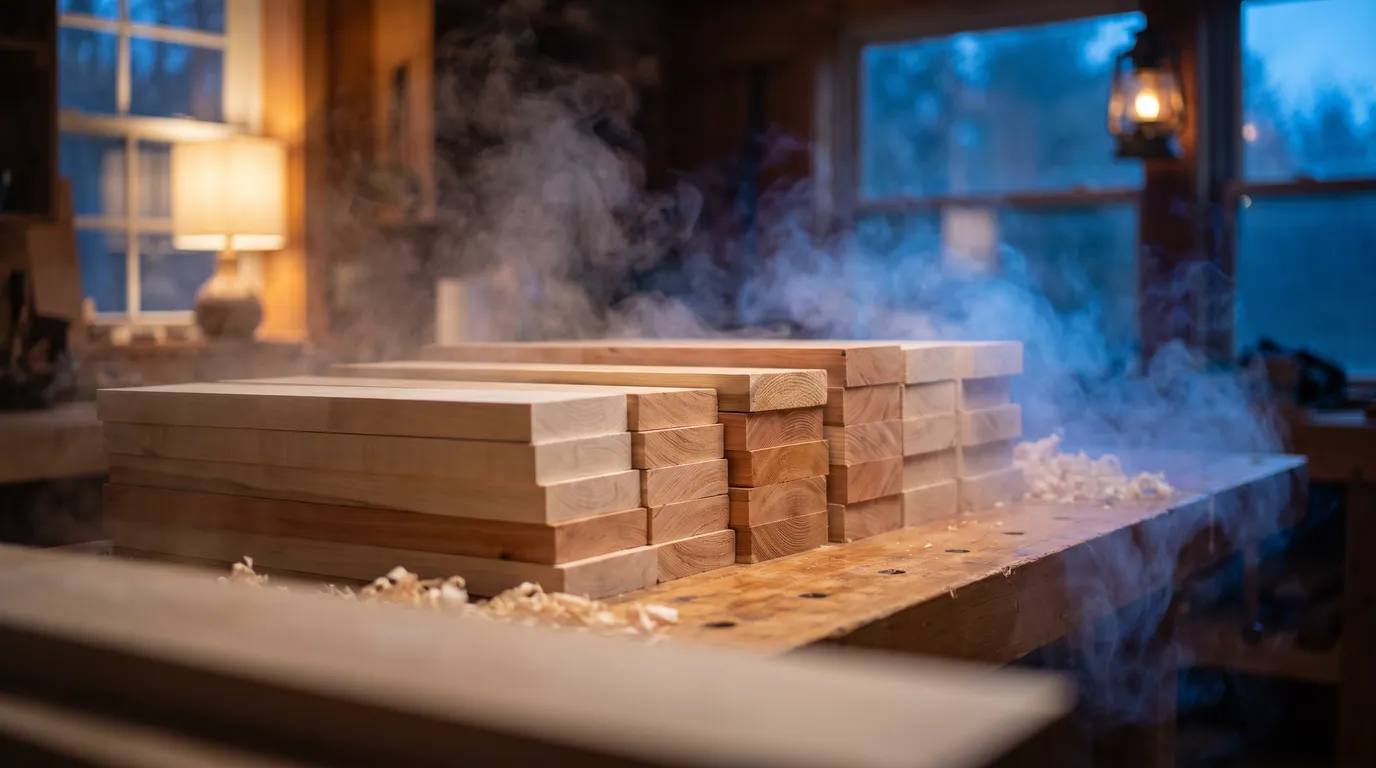
The wood is the sauna. It is what you smell when the door opens, what you lean against for twenty minutes at a time, and the thing that will either still look good in ten years or will not, which is why it deserves a better answer than "cedar, probably". Cedar does win most of the time and there are real reasons for that. But the reasons are specific, and at least two kinds of buyer are better served by something else. Here is what actually differs between the three woods you will be offered, priced live where we sell one, and an honest account of the question we have decided not to answer. Some links below are affiliate links, they never change our ranking, see our disclosure.
What sauna wood actually has to do
The job is narrower than it sounds. A sauna is a room that swings from cold to very hot and back again, repeatedly, with humid air and bare skin in it. So the wood has to sit at a temperature you can lean on without flinching, tolerate that cycling without splitting or warping, and cope with moisture without rotting. Density is what governs the first of those: lighter, more open timber does not hold and transmit heat the way a dense hardwood does, which is why sauna interiors are softwoods and why a metal fitting in the same room is the thing you learn not to touch.
Everything else is preference. Aroma, color, how it ages, and what it costs are all real considerations, but they are comfort and money rather than function, and it is worth being clear which kind of decision you are making at each step.
The three you will actually be offered
Nearly every home sauna sold in the US is one of these three, or a combination of them, cedar shell with aspen benches being a common pairing.
| What differs | Western red cedar | Hemlock | Aspen |
|---|---|---|---|
| Against bare skin | Low density, sits cooler than the air | Comparable in practice | Cool to the touch |
| Aroma | Strong, the smell people mean by "sauna" | Close to neutral | Effectively none, which is the point |
| Color over a decade | Darkens and mellows, silvers outdoors | Pale, holds its tone | Very pale, marks where people sit |
| What it costs | The premium. SK cedar barrel $4,795 today | The cheaper option in the same catalog | Budget interior, common on benches |
| Best for | Outdoor cabins, and anyone wanting the aroma | Indoor rooms, without the cedar premium | Benches, scent sensitivity, bright interiors |
Two more you will meet, and why they are not in the table
Nordic spruce. The default in Finland, where the tradition comes from, and common on imported cabins rather than domestic US ones. It is pale, it is cheaper than cedar, and the practical difference for a buyer is knots: spruce is usually a knottier board than clear-grade cedar, which some people like the look of and others do not. If you are comparing an imported cabin against a US built one, this is often the wood difference underneath the price difference.
Thermally modified wood. Timber, often aspen or spruce, that has been heat treated rather than chemically treated, which darkens it and changes how it takes up moisture. It shows up on benches and on some premium interiors and it is worth knowing the name rather than being sold it as a mystery premium material. As with any specific product, what it is rated for is the manufacturer's statement rather than ours.
Neither is in the comparison above because the table is the three you will actually be choosing between on most US listings. These two are worth knowing so an unfamiliar name on a spec sheet does not read as either a bargain or a red flag when it is neither.
Why cedar is the default, honestly
Three genuine reasons, and one that is mostly momentum. The genuine ones: it is light enough to sit cool against skin, it holds up to moisture and decay better than most alternatives which matters enormously on an outdoor cabin, and it smells like a sauna in a way people are actually buying. The momentum one: it is what the category has used for decades, so it is what buyers expect to see, and a manufacturer offering something else has to explain themselves.
Who should not pay the cedar premium. If the sauna is going indoors, the moisture and decay argument weakens considerably, because the wood is not facing weather. If anyone using it finds strong cedar aroma unpleasant, and some people genuinely do, then you are paying extra for the feature you like least. And if you are building rather than buying, cedar is where a build budget disappears fastest. In those three cases the step down is not a compromise, it is the better buy.
The list we are not going to publish
Every other page on this subject carries a "woods to avoid" section, so it is worth explaining why this one does not. Those lists make safety claims: that a particular timber does something harmful at sauna temperatures. That is a claim with a consequence if it is wrong, and when we went looking for who actually publishes it, the answer was other retailers and content sites repeating one another. The contract this site is written to does not allow us to cite those as evidence, and we are not prepared to assert a safety rule on our own authority just because everyone else does.
Here is the version that is actually useful. If you are buying a sauna, this is not your problem: the manufacturer chose the materials and warrants them. If you are building one, the documents that apply are your heater manufacturer's material and clearance requirements and your cabin maker's specification, and both publish them. Ask for those. They are specific to your room, they are written by the people who carry the liability, and they beat any general list including one we could have written.
The cedar you can actually buy
For what it is worth in a category full of unnamed "premium wood", the barrel below states its material plainly in the merchant's own listing: handcrafted in East Idaho in red cedar. The price updates from their feed rather than from anything typed here, so what you see is what it is today.

The Sweat Barrel (2-6 Person)
Red cedar throughout, stated in the merchant's own listing rather than described as premium wood and left vague.
from $4,795 · $4,795–$9,895 across 36 options, choose on the product page
Made to order, 5-week lead time stated by the retailer. Price is for the unit and excludes delivery.
If you are costing a build instead, the wood is one line in a bigger total and rarely the line that decides it: the sauna kits and build costs guide itemises the rest. Barrels have their own wood consideration because of the curve, covered in the barrel sauna guide. And whichever wood you land on, how long it looks good is mostly down to how you look after it, which is a shorter job than people expect.
What I'd tell a client. Wood is the decision people agonize over and it is rarely the one that determines whether they use the room. Heater sizing and where the sauna is sited matter far more to whether you go in four times a week. Pick cedar if it is going outside or if you want the smell, pick hemlock if you want the same room for less, pick aspen if the smell is the objection, and then spend the attention you saved on the two decisions that actually change the habit. The one thing I would push back on is paying a cedar premium for an indoor room when the person buying it does not much like the aroma. That happens more than you would think, because it is the default answer.
Common questions
What is the best wood for a sauna?
Western red cedar is the industry default and the wood the units we carry are built from: low density so it stays cooler against skin, good moisture and decay resistance, and the aroma people associate with a sauna. It is also the most expensive common choice, and not the right answer for everyone.
Is hemlock or aspen good for a sauna?
Both are common and legitimate. Hemlock is the usual step down from cedar in the same catalog. Aspen is very pale and effectively scent free, the usual pick for benches and for anyone who finds cedar too strong. The trade is aroma, price and how it ages, not whether it works.
Which woods should not be used in a sauna?
We do not publish a do not use list. Those are safety claims and the sources repeating them are mostly retailers. Your heater manufacturer and cabin manufacturer publish material requirements for their own products, and those are the ones that apply to your room.
Does the wood change how a sauna feels to use?
Daily, yes: how the bench feels against bare skin and how strongly the room smells. Once, yes: how it looks after ten years. What it does not change is the heat itself, which is the heater's job.
Sources & method
Wood characteristics on this page are described as industry practice, not as tested findings, and no health or safety claim is made about any timber. The cedar price is live from the Sweat Kingdom product feed and changes when the merchant changes it; hemlock and aspen are compared in relative terms because we do not carry them and an invented price band would be worth less than an honest comparison. Material requirements for a build are published by your heater and cabin manufacturers and take precedence over anything general here.