Ice
Cold plunges & ice baths
Some links below are affiliate links, they never change our picks. Disclosure.
The fastest-growing reason people buy a cold plunge today isn't a cold shower dare, it's recovery: lifters, runners and everyday hard-trainers using cold water to feel less wrecked the next day and get back to training sooner. That sits alongside the older draw, a real, short-term lift in mood and alertness (Fox et al., Scientific Reports, 2025), and it's now a home purchase worth anywhere from $79 to $32,000. As a wellbeing advisor who has spent his career helping organizations manage stress, health and recovery, my advice is the same one I'd give a client: buy the smallest thing that proves you'll use it, then upgrade. Here's how, the two real paths, what a cold plunge actually is, what each costs to buy and run, and which units are worth it.
What is a cold plunge (and what it isn't)
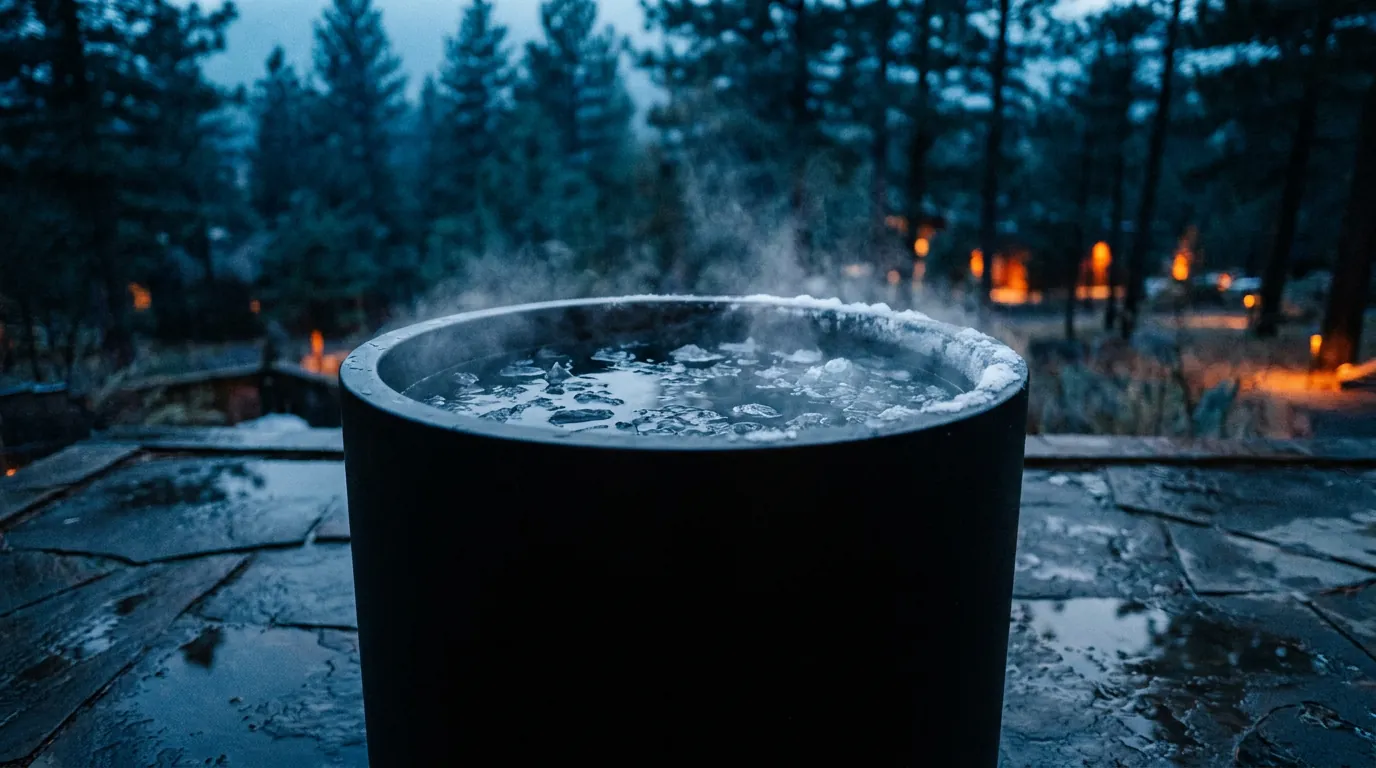
A cold plunge is a tub or barrel of cold water, roughly 39-59°F (4-15°C), that you get into for a short, deliberate soak, usually 1 to 5 minutes, deep enough to cover your chest. It isn't a cold shower (too brief, water only hits part of you) and it isn't an unheated pool (too warm, too long to be the same jolt). Some plunges are simply a tub plus bagged ice; others use a built-in chiller to hold an exact temperature every day without ice. Both deliver the same cold-shock response, they differ in cost, convenience, and how often you'll actually use them.
Ice bath vs cold plunge: same practice, two names
"Ice bath" is the older, literal term, water with actual ice floating in it. "Cold plunge" has become the umbrella name for the whole category, including chiller tubs that never touch a bag of ice. There's no real product difference behind the two terms, a cold plunge tub and an ice bath tub solve the same problem; which word gets used mostly comes down to marketing and whether the unit has a chiller or not. Buy on what the unit does (holds a set temperature, or needs ice each time), not on which name is printed on the box.
Portable ice bath, or a self-chilling tub?
Portable ice baths
No chiller, no electricity, you add ice. The cheapest way to test whether the habit sticks. →
Chiller tubs
Cold water on demand, all year, no ice. A real appliance, with a running cost to match. →
Start cheap, upgrade if it sticks
Most people who love cold plunging a year in started with a $150 tub and a few bags of ice. The gear that matters, a chiller, insulation, filtration, is worth buying once the habit is real, not before. If you're new, begin with a portable ice bath; step up to a chiller tub when the ice runs start to annoy you.
What cold water actually does
The best-supported effect is a real, short-term lift in mood, energy and alertness (Fox et al., 2025), plus eased next-day soreness after hard training, which is the recovery draw behind most new buyers right now. One caveat worth knowing before you plunge after a lifting session: cold immersion right after strength training can blunt the muscle and strength adaptations you trained for (Roberts et al., J Physiol, 2015), so if you lift for size or strength, put a few hours between the two. The full, honestly-hedged breakdown, what's proven and what isn't, is in our cold plunge benefits guide.
How cold, how long?
Most protocols land around 50-59°F (10-15°C) for 1-5 minutes, colder and shorter for mood and alertness, longer and colder for recovery work; beginners start nearer 60°F for a minute and build from there. Holding a target temperature every session, rather than drifting warmer as ice melts, is the one job a chiller does that a bucket of ice can't. The full dose table by goal, plus a beginner ladder, is in our cold plunge temperature guide. A word of care: cold immersion stresses the cardiovascular system, if you have a heart condition or are pregnant, talk to your doctor first.
What it costs to own
Three real ownership tiers, from testing the habit to a built-once ritual:
| Type | Buy it for | Running cost | Best for |
|---|---|---|---|
| Portable ice bath | $79 – $1,500 | ice each session, roughly $5-10 | testing whether the habit sticks |
| All-in-one bundle (in stock) | $569 – $1,499 | about $7-20 a month, electricity | powered cold without the premium build |
| Chiller tub | $5,000 – $9,000 | about $7-20 a month, electricity | daily use, cold ready without hauling ice |
| Integrated sauna + plunge shell | around $32,000 | about $30-50 a month | the whole heat and cold ritual, one delivered footprint, buy once |
Unit prices, excludes delivery. Work out the ongoing electricity for your rate in the cost-to-run calculator.
The math that makes the bigger spend rational: a twice-a-week $40 cold-immersion studio session runs about $4,160 a year. A $4,990 self-chilling tub pays that back in roughly fourteen months, and every plunge after is close to free, buy once, use it for a decade, rather than renting the habit a session at a time.
Ready to skip the ice? Two that ship now
Most chiller tubs at this price are made to order with a wait. These two aren't. The $569 to $4,990 gap between them is mostly a bolt-together bundle against a buy-once stainless build, both hold the same cold on demand, one is the honest way to prove the habit, the other is the decade buy once it's proven.

Plunge Chill Chiller and Tub
A chiller and tub already fitted together, plug in and hold temperature the same day it arrives.
$569
In stock. Price is for the unit and excludes delivery.
Code ANNIVERSARY10 takes $56.90 off, $569 down to $512.10 at the retailer.
Runs to January 1, 2027. Codes are the retailer's to change or withdraw, so check it applies before you pay.

The OG Plunge Tub
A self-chilling cold plunge tub, in stock now, no made-to-order wait.
from $4,990 · $4,990–$6,840 across 12 options, choose on the product page
In stock. Price is for the unit and excludes delivery.
Which page you actually want
Just testing it
Best portable ice baths →
Ready to commit, want it always cold
Best cold plunge tubs →
Already own a tub, need to chill it
Best cold plunge chillers →
Working out the budget
What a cold plunge costs →
Here for training recovery
Ice bath benefits for athletes →
The recovery science and dose
Cold plunge for muscle recovery →
Is it right for women?
Cold plunge for women →
Want to build your own
DIY cold plunge, costed honestly →
Heard it on a podcast
Wim Hof and cold plunging →
On a budget, ships now
Best budget cold plunges →
Want tub, chiller and filter in one
Best all-in-one cold plunges →
What the evidence really shows
Cold plunge benefits, graded →
Dialing in the dose
Cold plunge temperature and time →
Chiller add-on or all-in-one?
Chiller vs all-in-one →
Heat or cold, or both
Sauna vs ice bath →
The benchmark barrel, reviewed
Ice Barrel review →
Pair it with heat
Cold on its own is half the ritual. Ending a sauna on a cold plunge, heat, then cold, is where the practice lives, and it's the one thing we cover that sauna-only and plunge-only sites don't. We've matched the two into complete sauna + plunge packages at four budgets, so the heat and cold sides fit the same space and power rather than being two separate purchases.
Owning one, after the purchase
What keeping a plunge going actually involves, which is the difference between a tub you use every day and one you start avoiding.
How much a cold plunge costs
All-in by type from a $350 tub to a $32,000 contrast unit, plus what it really costs to run.
Cold plunge water care
Keeping plunge water clean: filtration, covers, the change and drain schedule, and why the dosing belongs to your unit manual.
Cold plunge chiller vs all-in-one
Buy a chiller for the tub you own, or a complete unit? The two paths costed, with what each gives up.
Start with the evidence
Before any of it costs you anything, what cold water genuinely does, how cold and for how long, and the claims that do not survive a look at the research.
Cold plunge benefits
What cold-water immersion actually does, what the research supports, and where it gets oversold, every claim graded.
Ice bath benefits for recovery
What cold immersion does for training recovery, the two doses by goal, and how to dose it.
Cold plunge for muscle recovery
What the trials show for soreness, the exact recovery dose, and the timing rule that protects your gains.
Cold plunge for women
What the (early) research shows on mood, menstrual and perimenopausal symptoms, graded honestly.
Wim Hof and cold plunging
What the method actually is, what the evidence supports, and how to start with a cold shower or a plunge.
The contrast therapy protocol
Sauna then cold plunge, done right: the order, temperatures, rounds, and an honest read of what the evidence supports.
Cold plunge temperature
How cold, how long, dosed by goal, plus a beginner ladder to build tolerance without quitting.
Sauna and cold plunge, before or after a workout
Recover faster or build more muscle, the timing decides which you get. Sorted by your training goal.
Sauna vs ice bath
Heat or cold, which to start with, and why most people end up wanting both.
Common questions
What is a cold plunge?
A tub or barrel of cold water, typically 39-59°F, that you soak in for 1 to 5 minutes. Portable versions use bagged ice; chiller tubs hold a set temperature on demand.
Is an ice bath different from a cold plunge?
No, same practice, two names. "Ice bath" is the older, literal term; "cold plunge" now covers the whole category, ice-filled or chiller-cooled.
How cold should a cold plunge be?
Most people work in 50-59°F for 1-5 minutes, beginners start nearer 60°F. Full dosing by goal is in the temperature guide.
Is a cold plunge worth the cost?
For daily use, yes, the math against $40 studio sessions pays back a chiller tub within about a year. For occasional use, start with a $150-$300 portable tub and bagged ice.
Sources & method
Based on manufacturer specifications, third-party and clinical data, and our own research, not first-hand product testing. The mood and alertness finding is from Fox et al., Scientific Reports, 2025; the post-strength-training caveat is from Roberts et al., J Physiol, 2015 (PMID 26174323). Full citations and hedged claims are in the cold plunge benefits guide and the temperature guide. Prices are current July 2026 and exclude delivery; confirm at the retailer, they move often.