Cold plunge temperature: cold enough to work, easy enough to keep doing
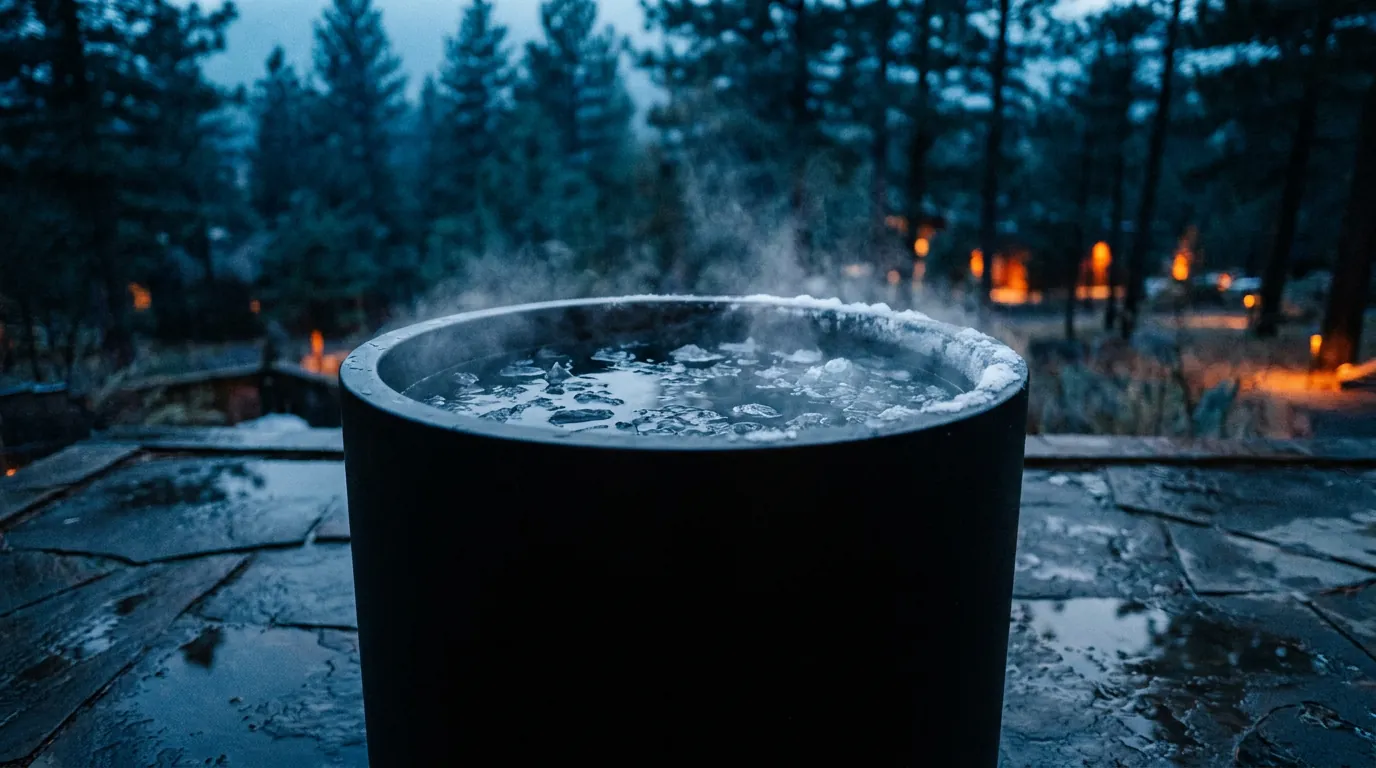
The whole point of a cold plunge is what you feel afterwards: the jolt of energy, the calmer head, the easier legs the day after a hard session. But that only works if you get in regularly, and the fastest way to quit is to make it too cold to face. So the target is not "as cold as possible," it is cold enough to trigger the response, tolerable enough to do most days. Here is the dose by goal, a beginner ladder to build up, and the honest limits of what cold does. Some links below are affiliate links, they never change what I recommend, see our disclosure.
Dose it to what you want from it
The evidence points to genuinely different sweet spots depending on the outcome you care about (Wang et al., Frontiers in Physiology, 2025). Pick your goal and take the number:
Short and sharp. The lift is reliable but short-term, not a treatment for anxiety or depression.
PMID 41388053See the full dosing table
| Your goal | Temperature | Time in | Evidence |
|---|---|---|---|
| Mood and energy | 50 to 59°F | 1 to 3 min | ProvenPMID 41388053 Short and sharp. The lift is reliable but short-term, not a treatment for anxiety or depression. |
| Soreness recovery | 52 to 59°F | 10 to 15 min | ProvenPMID 40078372 The 11 to 15 C band the recovery trials favoured for easing next-day soreness. |
| Power and performance | 41 to 50°F | 10 to 15 min | ProvenPMID 40078372 Colder, the 5 to 10 C band best for restoring jump power and strength readiness. |
| Daily habit / beginner | 55 to 60°F | 1 to 3 min | Individual Tolerable enough to actually repeat. Work colder as you adapt, not the other way round. |
How long, and how often
These two questions come as a pair. For energy and mood, 1 to 3 minutes is the working range from the picker above; for recovery work, trials used longer, 10 to 15 minutes. Frequency depends on the goal, not a fixed schedule:
- Mood, energy, stress: most days works, 3 to 7 times a week. This is the goal where showing up beats intensity.
- Recovery after hard training: after the sessions that need it, roughly 1 to 3 times a week. Daily plunging is not required, and right after lifting it can blunt strength gains (see our workout timing guide).
- Building tolerance as a beginner: 3 to 4 times a week while you adapt, using the ladder below. Skipping a day is fine, skipping weeks resets your tolerance.
The beginner ladder
Do not start at 45°F for ten minutes. Build tolerance and you will still be plunging in a year.
- Week 160°F1 min
Just get in and breathe slowly. That is the whole session.
- Weeks 2 to 357°F2 min
Colder, a touch longer, breathing still controlled.
- Week 4 and on50 to 55°F3 min
The everyday dose most people settle on.

What the cold actually does, honestly
Cold immersion gives a real, reliable short-term lift in energy, mood and the sense of being able to handle stress (Fox et al., Scientific Reports, 2025). What it is not is a treatment for clinical anxiety or depression, a 2025 meta-analysis found the mood effect is brief rather than lasting (Cain et al., PLOS One, 2025). For muscle soreness it helps in the first day, though it does not clearly beat active recovery, and used right after strength training it can blunt gains (see our workout timing guide). Plunge because you feel better for it and it keeps you consistent, not because it is a cure.
To hold a set temperature, you need a chiller
Dosing to a target only works if the water actually stays at that temperature. A tub of ice drifts warmer as it melts, so daily, consistent plunging at, say, 50°F means a chiller that holds it there, or you accept the variability of ice in a plunge tub. If you are just testing the habit, ice in a portable tub is the cheap way to start; add the chiller when the ice runs get old.

COLD PLUNGE CHILLER
Add this to hold a target temperature in the tub you own, instead of chasing it with ice.
$499
In stock. Price is for the unit and excludes delivery.
Code ANNIVERSARY10 takes $49.90 off, $499 down to $449.10 at the retailer.
Runs to January 1, 2027. Codes are the retailer's to change or withdraw, so check it applies before you pay.
Common questions
How cold should it be?
50 to 59°F for most people; beginners nearer 60°F, working down. The temperature you will use most days beats the coldest one.
How long?
1 to 3 minutes for mood and alertness; 10 to 15 for recovery. Start with a minute and build.
Does it help mood and sleep?
A real short-term lift, yes; a cure, no. Keep it earlier in the day, or finish on heat if you plunge at night.
Hold your dose, don't chase it with ice
A built-in chiller keeps you at the target temperature every session.

The OG Plunge Tub
A cold plunge with a built-in chiller, so you can dial and hold your target temperature.
from $4,990 · $4,990–$6,840 across 12 options, choose on the product page
In stock. Price is for the unit and excludes delivery.
Sources & method
Evidence cited above: Wang, Wang & Pan, Frontiers in Physiology, 2025 (55-trial network meta-analysis, dosing by outcome) (PMID 40078372); Fox et al., Scientific Reports, 2025 (mood and energy lift) (PMID 41388053); Cain et al., PLOS One, 2025 (11-trial meta-analysis, stress and mood) (PMID 39879231).
The dosing ranges are from the network meta-analysis cited above; the beginner ladder is practitioner consensus, not a trial result. The mood lift is well supported and short-term; a lasting mood cure is not. Cold immersion carries real cardiovascular risk, take the safety note seriously and check with a doctor if you have any relevant condition. Nothing here is medical advice.