Ice bath benefits for athletes, the dose depends on your goal
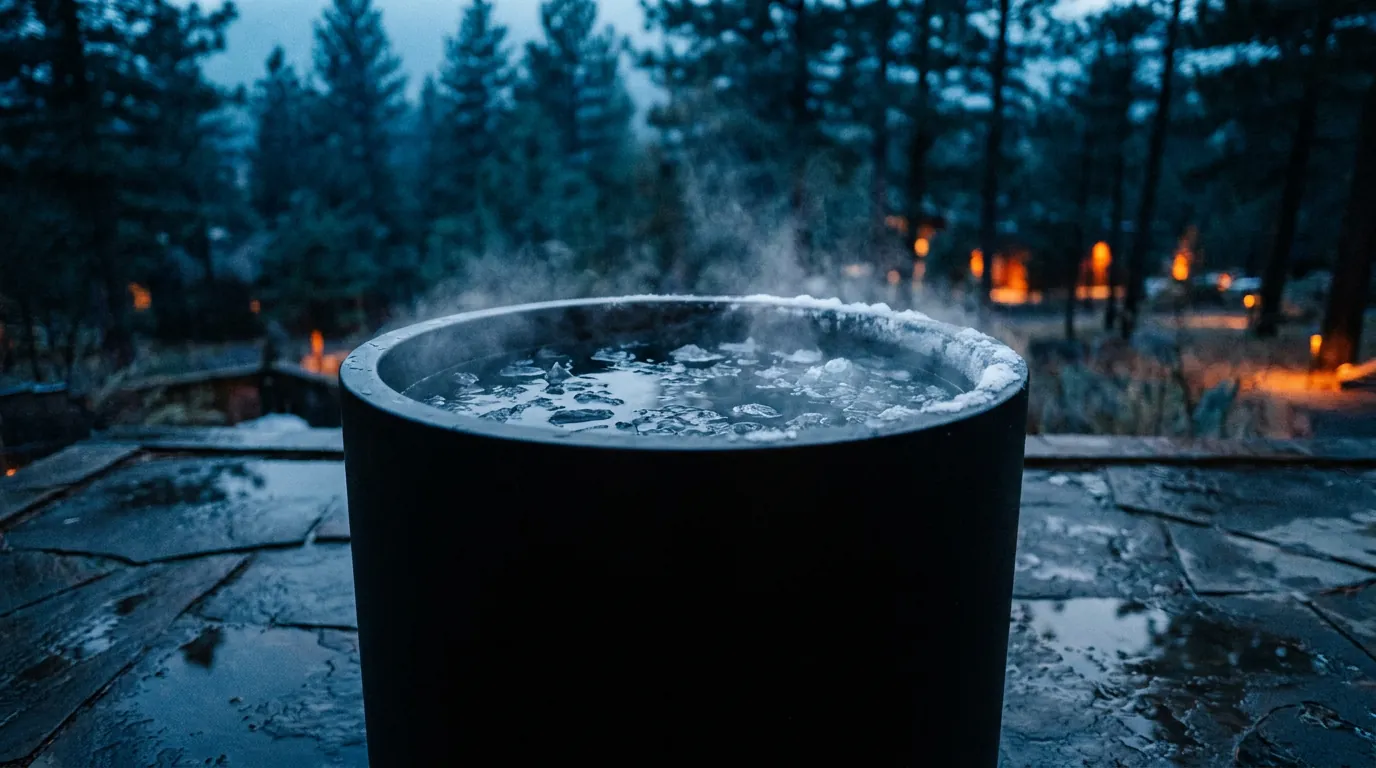
If you're reading this after a hard session, the question isn't whether cold water feels good, it's what dose actually helps, and for what. As a wellbeing professional who has spent his career helping organisations manage health, stress and recovery, here's the honest, cited answer: the dose that works depends on whether you're chasing pain relief or restoring performance markers, and they aren't the same number (Wang et al., Frontiers in Physiology, 2025, PMID 40078372). This article contains affiliate links; if you buy through one, we may earn a commission at no extra cost to you.
Not what you're after? This page is written for athletes and lifters chasing recovery and next-day training. If you're weighing cold plunging for general mood, stress and long-term wellbeing rather than a specific training block, our cold plunge benefits guide covers that angle instead. Same cold water, different question.
What an ice bath does after training
Strip away the marketing and the honest, bounded picture is this: an ice bath reduces perceived muscle soreness (DOMS) after hard exercise. A 2022 Cochrane review rated the evidence moderate quality for cold water immersion reducing DOMS compared with passive rest (Cochrane 2022, CD008262). Athletes reliably report feeling less beaten up the next day. It doesn't repair tissue any faster, it changes how sore you feel while your body does that work anyway.
It's worth being precise about what "recovery" means here, because the word gets stretched to cover things the evidence doesn't. An ice bath is not repairing muscle fibres faster, not clearing metabolic waste on a schedule the body wouldn't hit anyway, and not shortening the underlying healing process. What it changes is the subjective experience of soreness and, at the right dose, measurable performance markers, and for an athlete deciding whether to show up hard for tomorrow's session, that's genuinely useful.
The dose, it depends on what you want
Most "ice bath temperature" advice gives you one blanket number. That number doesn't exist. A 2025 network meta-analysis of 55 randomized trials found two distinct doses work best, and which one you want depends on whether you are chasing pain relief or restoring performance markers such as creatine kinase and jump power (Wang et al., Frontiers in Physiology, 2025, PMID 40078372).
| Your goal | Temperature | Time in | Evidence |
|---|---|---|---|
| Pain and soreness relief (DOMS) | 11 to 15°C (52 to 59°F) | 10 to 15 min | ProvenPMID 40078372 |
| Performance markers, creatine kinase and jump power | 5 to 10°C (41 to 50°F) | 10 to 15 min | ProvenPMID 40078372 Colder than the pain-relief dose, and colder than most people default to. |
Where does an ice bath sit against other pain-relief options? A separate 2022 review of 59 studies on pain specifically found a hot pack works best in the first 24 hours, cryotherapy chambers work best after 48 hours, and cold water immersion sits mid pack for pain throughout, not the strongest option at either end, but a reasonable one across the whole window (Wang et al., Journal of Rehabilitation Medicine, 2022, PMID 34636405).
Be honest about what "best" means here. Best for pain is not the same dose as best for performance markers, and an ice bath isn't clearly the single best tool for pain once you compare it against a hot pack or a cryotherapy chamber. What it has going for it is that you already own the tub and it works reasonably well across the board.
- Endurance or conditioning day. Ice bath straight after, 10 to 15 minutes at 11 to 15°C (52 to 59°F) for soreness relief. Drop to 5 to 10°C (41 to 50°F) for the same 10 to 15 minutes if restoring power and jump readiness for tomorrow matters more than comfort.
- Strength or hypertrophy day. Skip the ice bath in the hours after. If you want the cold anyway, do it before training or move it to a rest day instead.
- Competition week. Ice bath the day after the hardest session is a reasonable default, 11 to 15°C for 10 to 15 minutes covers the soreness-relief use case the evidence actually supports.
For the full temperature-by-goal breakdown, contrast options and a beginner ramp-up schedule, see our cold plunge temperature guide, it's the canonical dosing reference for both the athlete and wellbeing angles.
A few practical notes worth acting on. Build up gradually rather than starting at your target temperature and duration on day one; a week or two easing in reduces both the shock to your system and the chance you quit after one bad session. Immersion depth matters more than people expect, submerging to the chest or shoulders gets you the response the research is describing, feet or legs alone is a much milder stimulus and won't deliver the same effect. And consistency beats intensity: three sessions a week at the right dose over a season will do more for you than one brutal, colder-than-necessary session that you dread and skip half the time.
The hypertrophy warning, read this before you ice after lifting
Cold water immersion straight after strength training attenuates the acute anabolic signalling in muscle and, over a training block, blunts the long-term strength and hypertrophy adaptations you're actually training for. This is well established in the sports science literature; see our cold plunge for muscle recovery guide for the full citation and the goal-by-goal dose research. In plain terms: ice right after a lifting session can quietly work against the size and strength gains you're chasing.
The timing rule. If size or strength is the goal, don't ice bath in the hours right after a resistance session. Push it to a separate day, do it before training instead of after, or save it for conditioning and endurance days where hypertrophy signalling isn't the point.
My advisory take: most athletes asking about this aren't in a dedicated hypertrophy block, they're trying to feel human for tomorrow's game, race, or second session. For that goal, the trade-off is usually worth it. But if you're mid strength block chasing size, this is the one piece of evidence here I'd actually build a training week around, not just note and ignore.
What an ice bath does for mood and alertness
Beyond the dosing effects above, cold immersion reliably lifts momentary energy, mental clarity and the sense of handling stress. For athletes, that shows up as a genuine mental edge, the "I did something hard" state before a big session or competition. We cover that evidence in depth on our cold plunge benefits guide; the point here is narrower: it's a real bonus, not the reason to pick a colder or longer dose.
In my advisory work, this is the part athletes underrate going in and overrate once they've stuck with it a few weeks. The soreness relief is what gets them into the water the first time; the alertness and "I can handle discomfort" mindset is what keeps them coming back once a season settles into a grind. Neither replaces sleep, fuelling or a sensible training load, an ice bath is a tool in the recovery kit, not the recovery plan.
Does an ice bath help you lose weight?
No, not in any way that matters. There's a small, real uptick in metabolic activity while your body works to rewarm itself, but it's nowhere near enough to move the needle on body composition. If weight loss is the actual goal, an ice bath is the wrong tool; treat any "ice bath for weight loss" claim you see as marketing, not evidence, and put the effort into training and diet instead.
This matters for how you should judge your own progress. If you're icing consistently and the scale hasn't moved, that's expected, not a sign you're doing it wrong. Judge an ice bath by the metrics it actually affects, next-day soreness, performance markers if you dosed for them, and how alert you feel afterward, not by weight or body composition.
Safety first
Cold immersion triggers a "cold shock response", a sharp, brief spike in heart rate and blood pressure that is the riskiest moment. If you have a heart condition, high blood pressure, or are pregnant, get medical advice before you start. Never ice bath alone as a beginner, never after alcohol, and get out if you feel faint, chest-tight, or can't control your breathing. This is information, not medical advice.
What happens in the water, minute by minute
This is the shape of the response, not exact numbers, exact heart rate and duration vary by person, water temperature and immersion depth. What's consistent across athletes is the pattern: shock, settle, focus, lift.
Ready to try it this week
You do not need to buy a tub to test whether the soreness relief and mental edge are worth it to you. A portable pod paired with bagged ice or a chiller lets you start the recovery habit this week.

Plunge Chill Pod
A portable ice bath tub for testing the habit before you commit to a permanent setup.
$79
In stock. Price is for the unit and excludes delivery.
Code ANNIVERSARY10 takes $7.90 off, $79 down to $71.10 at the retailer.
Runs to January 1, 2027. Codes are the retailer's to change or withdraw, so check it applies before you pay.
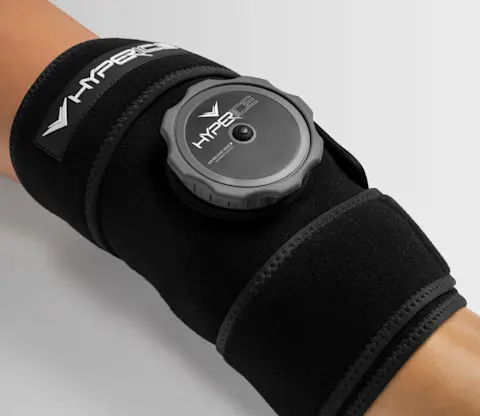
Hyperice Knee Ice Compression Wrap
Cheaper again, and only cold on one knee rather than the whole body benefits described above. Worth knowing about if a single sore joint is the reason you are here.
$90
Check current stock with the retailer. Price is for the unit and excludes delivery. This merchant's feed last updated in May 2026, so treat the price as that date rather than today's.
If you're icing after every hard session
A tub that chills itself is the practical upgrade over a daily ice run, ready whenever training finishes.

The OG Plunge Tub
A self-chilling cold plunge built for daily post-training use, no bagged ice required.
from $4,990 · $4,990–$6,840 across 12 options, choose on the product page
In stock. Price is for the unit and excludes delivery.
Not ready to commit? Start with a portable ice bath for a training block or two before deciding whether a permanent cold plunge earns its price. And if your recovery stack includes heat as well as cold, our sauna before or after workout guide covers how to sequence the two without one undoing the other.
FAQ
What does an ice bath do?
It triggers the cold shock response and, dosed right after hard training, reduces perceived muscle soreness and, at a colder dose, helps performance markers like creatine kinase and jump power. It also gives a real, short-term lift in mood and alertness. It does not burn meaningful fat or cure anxiety.
Why do athletes take ice baths?
Mainly to feel less beaten up the next day so they can train or compete again sooner, plus the mental edge of doing something hard on purpose. Not because it builds more muscle, timed wrong it can do the opposite.
How cold and how long should an ice bath be?
It depends on your goal. For pain and soreness relief, 10 to 15 minutes at 11 to 15°C (52 to 59°F). For performance markers such as creatine kinase and jump power, 10 to 15 minutes at 5 to 10°C (41 to 50°F), colder than most people default to. The underlying trials are rated fair to poor quality, treat these as the best current numbers.
Should I take an ice bath right after a workout?
After conditioning or endurance work, yes. Right after strength training aimed at size or strength, no, it can blunt the muscle and strength adaptations you just trained for.
Do ice baths help you lose weight?
Not meaningfully. The metabolic boost from brief cold exposure is real but small, nowhere near enough to matter for fat loss.
Are ice baths safe?
For most healthy adults, used sensibly, yes. The cold shock response briefly spikes heart rate and blood pressure, which is risky for people with heart conditions. Anyone with cardiovascular disease, high blood pressure, or who is pregnant should get medical advice first, and no one should ice bath alone as a beginner or after alcohol.
Sources & method
Evidence cited above: Wang et al., Frontiers in Physiology, 2025 (55-trial network meta-analysis, dose split by pain relief vs performance markers) (PMID 40078372); Wang et al., Journal of Rehabilitation Medicine, 2022 (59-study network meta-analysis, cold water immersion mid pack for pain relief) (PMID 34636405); Cochrane review (moderate-quality evidence cold water immersion reduces DOMS) (source).
The underlying trials behind the dosing numbers above are rated fair to poor quality by the review authors; treat the temperatures and times as the best current estimate, not a guarantee. Based on published clinical research (cited above) and our own review of the evidence, not manufacturer marketing claims. This page is updated as new research is published. Nothing here is medical advice.