Sauna cleaning and care: the ten minute habit that protects the investment
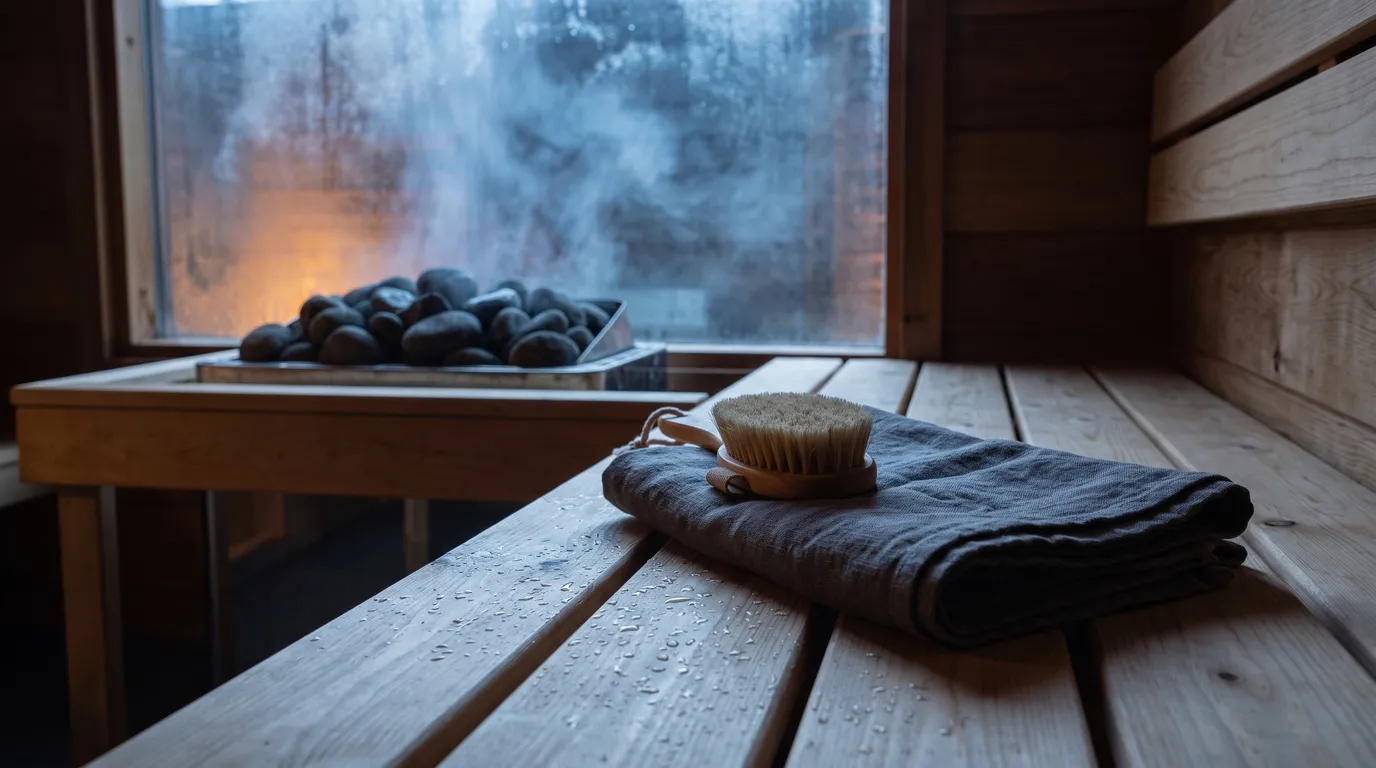
You spent real money on a room built for recovery, and ten minutes of care a week is what keeps it a place you still want to sit in a decade from now. The good news is that a sauna is one of the easiest rooms in a house to look after, because the heat does most of the work: a room that runs hot and dries out properly is hostile to almost everything that spoils it. The bad news is that the few things which genuinely damage a sauna are things people do to it on purpose, usually with the best intentions and a tin of something. This is the routine, what to keep away from the wood, and what the published guidance actually says about mold. Some links below are affiliate links, they never change our ranking, see our disclosure.
The routine, by cadence
Sorted by how often it needs doing rather than by how important it sounds. The fourth column is there because it matters whose instruction you are following: some of this is a manufacturer telling you how to protect a warranty, and some of it is simply what people who own saunas do.
| Task | How often | What you need | Whose instruction |
|---|---|---|---|
| Wipe the benches and backrests dry | After every session | A dry towel | Common practice |
| Scrub the benches with plain water | After each use, per Finnleo | A stiff hand brush, a bucket | Finnleo care guidance |
| Wash tougher marks off the wood | When a mark will not brush out | Warm water, a mild detergent | Finnleo care guidance |
| Air the room with the door open | After every session | Nothing | Common practice |
| Treat door handles and floor boards | As they need it | A wood sealant, per your maker | Finnleo, the stated exception to the no finishes rule |
| Vacuum or sweep the floor | Monthly | A vacuum or a soft broom | Common practice |
| Check the stones for cracking and dust | Yearly | Your hands, a bin | Heater manufacturer, yours will state an interval |
| Re-stain the exterior | When water stops beading | An exterior sauna stain | Exterior only, see below |
Cleaning sauna wood without wrecking it
The surfaces you sit against are left unsealed on purpose, and unsealed wood is more forgiving than people expect. Finnleo’s own care guidance puts the routine at its simplest: keep a hand brush in the sauna and scrub the benches with plain water from a bucket. For marks that will not brush out, the same guidance moves up to warm water with a mild detergent. That is the whole method for most owners, most of the time.
What does the real work is drying, not scrubbing. Sweat soaks into bench wood, and wood that is repeatedly wet and then closed up in a dark room is where staining and smell begin. Sitting on a towel, towelling the benches afterwards, and leaving the door open so the room dries out will keep a sauna in better condition than any product will. If you own a light colored wood like aspen, this is also the difference between benches that stay pale and benches that go patchy in the places people actually sit.
What should never touch the inside
There is one instruction here that manufacturers state without hedging, and it is worth quoting exactly rather than paraphrasing. Finnleo publishes it as: “Do not paint, varnish, or stain the interior surfaces of your sauna.” The reasoning they give is that the wood needs to breathe, a sealed surface gets hotter against skin, and finishes can give off fumes at the temperatures a sauna runs at. Finnleo then states its own exception in the very next guideline, and it would be dishonest to quote the rule and drop it: door handles and floor boards are excepted, and they say those can be treated with a wood sealant or a polyurethane finish. Finnleo also recommends paraffin oil on benches and wall panels. So the rule is specific rather than absolute: no finishes on the surfaces you sit against and sweat into, with named exceptions for the parts that get handled and walked on.
This one catches out careful people. Sealing timber is exactly what you would do to protect a deck or a garden bench, and it is the wrong instinct in a hot room. If you have inherited a sauna where somebody has already varnished the interior, that is a question for the manufacturer rather than for us, because the fix depends on what was used and on what the wood is.
Beyond that, treat any product you are unsure about as a question for the maker of your cabin. We publish no list of banned chemicals and no dilution ratios, because a wrong number in that kind of instruction has consequences we would be responsible for and your manufacturer has already published the right one for your room.

Sauna Cleaner
A cleaner formulated for sauna interiors, for the occasional job that plain water and a brush will not shift. Optional: most weeks the brush is enough.
$25
Confirm stock and lead time with the retailer. Price is for the unit and excludes delivery.
Mold in a sauna, and why it is usually a moisture problem
A traditional sauna that is used and dried properly is a hostile place for mold, which is why mold is far more often a complaint about a room that has been sitting unused and damp, or one that never dries between sessions, than about a room in heavy use. That is the first thing to check: not what to clean it with, but why the room is staying wet.
On the cleaning itself, the guidance that matters is public and free, so here it is rather than our version of it. The EPA states that “if the moldy area is less than about 10 square feet (less than roughly a 3 ft. by 3 ft. patch), in most cases, you can handle the job yourself”, and points homeowners toward professional help above that. The same guidance is blunt about cause over symptom: “Fix plumbing leaks and other water problems as soon as possible. Dry all items completely.”
We are not going to publish a mold recipe on top of that. The EPA page is more careful than anything we would write, it is free, and it is the source a sauna maker will point you to as well. What we will say is the part that is specific to a sauna: if mold has appeared, the ventilation and the drying habit are the things to change, because a room that dries properly does not give it anywhere to start.
The stones, and the cabin that has none
Sauna stones are a consumable rather than a fixture. Heat cycling breaks them down over time, the pieces settle and pack together, and airflow through the heater suffers as they do. The job is to lift them out periodically, discard anything cracked or crumbling, and restack the rest loosely enough for air to move. How often, and how they should be stacked around the elements, is set by your heater manufacturer for your model, and that instruction is worth following exactly rather than approximately, because it is about how the heater sheds its heat.
If your cabin is infrared, most of this page is about a different appliance. There are no stones, there is no steam, and the surfaces are heater panels alongside the wood rather than wood alone. Do not assume traditional sauna care transfers to it: the maker of an infrared cabin publishes its own care instructions covering what may go near the panels, and those are the ones that apply. What does carry across is the part that was never about the equipment, which is towelling down and letting the cabin air out.
Exterior care, where stain belongs
Outdoors, the rule inverts. The outside of a cabin or barrel is exposed to weather, and exterior stain is normal and expected there, on the shell rather than the room you sit in. The simplest test of when to redo it is whether water still beads on the surface; when it soaks in instead, the finish has stopped working. Left alone entirely, untreated cedar will silver over time, which is a cosmetic outcome rather than a structural one, and some owners prefer it.
If you are choosing a cabin rather than maintaining one, the wood you pick changes how much of this you are signing up for, which the guide to sauna woods covers. Barrels have their own exterior quirks because of the shape, covered in the barrel sauna guide.

Ultra-Low VOC Sauna Stain
An exterior sauna stain, for the outside of an outdoor cabin. Note the distinction the manufacturers draw: exterior yes, interior never.
from $75 · $75–$199 across 4 options, choose on the product page
Confirm stock and lead time with the retailer. Price is for the unit and excludes delivery.
When maintenance is really replacement
Two things wear out rather than clean up. Sauna stones break down: they crack and crumble with heat cycling, the pieces pack together, and airflow through the heater suffers, so they get replaced periodically on whatever interval your heater manufacturer publishes. And bench wood that has been repeatedly soaked and never dried can go beyond what brushing recovers, at which point replacing the bench boards is a smaller job than it sounds and a much better outcome than sanding a bench you sit on with bare skin.
If you are at the point of costing repairs against a replacement, the cost of ownership calculator gives the five year running figure for a new unit, which is usually the number that settles it. Weather exposure is the biggest single driver of how much of this you end up doing, so it is worth reading the outdoor sauna comparison with maintenance in mind rather than just price.
What I'd tell a client. Most sauna care advice is written by people who sell sauna care products, so it is heavier on products than the job needs. In a hot, damp room used by more than one person, the things that actually decide whether it stays pleasant are ventilation, drying and a towel between skin and wood. Those are free. I would rather someone left the door open after every session and never bought a cleaner than the reverse. And where an instruction carries a real consequence, like mold or anything you might coat the wood with, I would rather quote the EPA or the manufacturer and link it than have you take my word for it.
Common questions
How do you clean a sauna?
Towel the benches dry after each session, air the room with the door open, and brush the benches with plain water weekly. Finnleo’s care guidance suggests a hand brush kept in the sauna, stepping up to warm water with a mild detergent only for marks that will not brush out.
Can you stain or varnish the inside of a sauna?
Not the surfaces you sit against. Finnleo publishes it as “Do not paint, varnish, or stain the interior surfaces of your sauna”, because the wood needs to breathe, a sealed surface gets hotter against skin, and finishes can give off fumes at sauna temperatures. Finnleo excepts door handles and floor boards, which it says can take a sealant or polyurethane, and recommends paraffin oil on benches. Exterior stain on an outdoor shell is a different job again.
How do you get mold out of a sauna?
Fix why the room is staying wet first. On the cleaning, the EPA states that under about 10 square feet, roughly a 3 ft by 3 ft patch, most homeowners can handle it themselves, and points to professional help above that. We publish no formula of our own; the EPA page is free and more careful than ours would be.
Why does my sauna smell?
Almost always because it is not drying between sessions. Sweat soaks into bench wood and a room closed up wet holds it. Airing with the door open, towelling the benches and sitting on a towel remove most of it. A smell that survives a dry week is a moisture problem, not a cleaning one.
How often should a sauna be cleaned?
By cadence rather than frequency: towel and air after every session, brush weekly, sweep monthly, check the stones yearly. Almost all the protective value sits in the after-every-session habits that take about a minute.
Sources & method
Evidence cited above: Finnleo, Sauna Care and Maintenance (manufacturer care guidance; interior finishes, brush and water routine). Read 2026-08-25. (source); US Environmental Protection Agency, Mold Cleanup in Your Home (the 10 square feet threshold; fixing water problems). Read 2026-08-25. (source).
No health claims are made on this page and no cleaning formulas, dilution ratios or chemical instructions are published in our own voice. Where an instruction carries a consequence if it is wrong, it is quoted from the organization that published it and linked, so you can read the original. Your own heater and cabin manufacturers publish care intervals for your specific room and those take precedence over anything general written here.