Dry sauna, explained: what it means, what it does, and how to bring it home
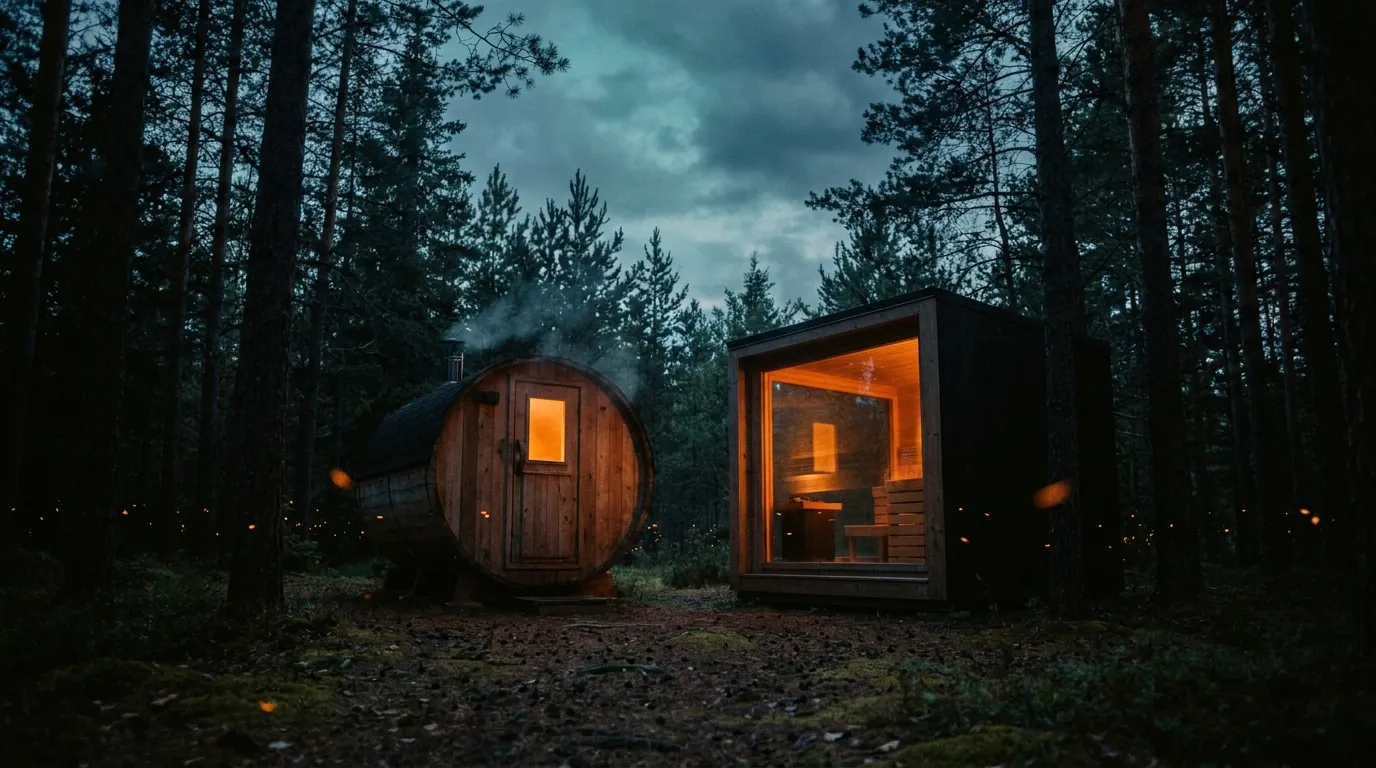
As a wellbeing professional who has spent his career on health, stress and recovery, the question I hear most from gym members going shopping is simple: how do I get that dry sauna at home. A 20.7 year Finnish cohort found frequent traditional dry sauna use tracked with a 63 percent lower risk of sudden cardiac death (Laukkanen et al., JAMA Internal Medicine, 2015). Here is what dry actually means, why it works, how it stacks up against steam and infrared, and what to buy. Some links below are affiliate links, they never change what I recommend, see our disclosure.
You know the room. The locker room dry sauna at your gym, or the hotel spa: cedar benches, a stone heater glowing in the corner, dry heat that hits hard within a minute and stays honest the whole session, no fog, no wet tile underfoot. That is the room people want to recreate at home, and the good news is it is one of the simpler wellbeing purchases you can make, a delivered cabin you wire in, not a construction project.
What "dry" actually means
A dry sauna is the traditional Finnish sauna, run hot and low humidity: 150 to 195°F air with only 10 to 20 percent humidity. A rock heater, electric or wood, warms the air directly, and because the air is dry, sweat evaporates off your skin and cools you as it works, which is exactly what lets you tolerate that much heat for 10 to 20 minutes. "Dry" is the default state of the room, not a permanent limitation. The same heater that keeps a dry sauna dry will also give you wet heat on demand: pour water over the hot rocks and you get löyly, the wet burst. A dry sauna and a "wet sauna" are usually the same physical product, used two different ways, which is the single most useful thing to know before you shop, and we take that apart in full in wet vs dry sauna.
Dry vs steam vs infrared, one screen
Three products get lumped together as "sauna" and they are not interchangeable. Here is where each one actually sits.
| Dry (traditional) | Steam room | Infrared | |
|---|---|---|---|
| Air temperature | 150–195°F | 110–120°F | 120–150°F |
| Humidity | 10–20% (dry, or a löyly burst) | ~100% (saturated) | Low, no steam possible |
| Heat source | Rock heater warms the air | Boiler injects wet steam | Panels warm your body directly |
| Power needed | Usually a 240V dedicated circuit | 240V boiler plus plumbing | Often a standard 120V plug |
| Install reality | Delivered cabin or barrel, wired on site | Plumbed, tiled, vapor sealed room | Delivered cabin, plug in |
| Cost to buy | $2,500–$15,000 pre-built | $5,000–$20,000+ construction | $2,000–$8,000 pre-built |
| Evidence base | Strongest: 20+ year Finnish cohort data | Thin, mostly borrowed from dry-sauna studies | Thinner, same mechanism assumed |
Why it works: heat stress, not "sweating out toxins"
This is the part almost every sauna page gets wrong. Sweat is overwhelmingly water and salt; it is not a meaningful route for clearing toxins, and your liver and kidneys already do that job. The real reason a dry sauna moves the needle is heat stress. Deliberately raising your core temperature sets off a cascade of protective, well studied responses, and the heart rate it produces sits in the range of light to moderate exercise (Laukkanen and Kunutsor, Temperature, 2024).
None of that requires a single drop of "detox." It is the heat itself, repeated a few times a week, that the body adapts to, the same way it adapts to training. That is why the outcome data is dose dependent: more heat stress, within reason, tracks with more benefit.

Dry sauna benefits: the evidence
This is where the case for choosing dry over the alternatives gets strong, not vague. Nearly every long term outcome study on sauna and health used a hot, dry, traditional Finnish sauna, not a steam room and not an infrared cabin.
Roughly 40 percent lower all-cause mortality showed up in the same cohort, again rising with frequency (Laukkanen et al., 2015). Beyond the headline number, the practical advantages of a dry sauna are real too: dry air is easier to build for (a delivered cabin, not plumbing), easier to maintain (a wood interior, not damp tile that needs constant cleaning, our sauna cleaning and care guide covers the whole routine), and gives you the option of steam on demand through löyly, which a steam room cannot reverse in the other direction. We grade every other claimed benefit, stress, sleep, skin, detox, honestly against the evidence in the full sauna benefits guide.
Bringing it home: what to buy
A dry sauna for home is a manufactured product, not a room you build. It arrives as a barrel or a panelized cabin, gets wired to a 240V circuit by an electrician (some smaller units run on 120V, but most traditional heaters over about 4.5kW want the dedicated circuit), and you are using it within a day or two of delivery. The heater is what actually makes the room, it decides how fast you get to temperature and whether löyly is even an option, so do not treat it as an afterthought to the cabin: see our full best sauna heaters breakdown before you buy a bundle. If you want the room outside, away from the house and closer to the classic gym locker feel, our best outdoor saunas picks cover the units built for weather. For a cabin sized right for a couple sessions a week at home, this is the one I point clients to.

The Summit (2-6 Person)
A traditional dry cabin, delivered rather than built. Add a heater and rocks at checkout, since the from-price is the shell, and budget an electrician for the 240V circuit. Then pour water on the rocks for löyly when you want the wet burst, dry the rest of the time.
from $5,995 · $5,995–$11,995 across 24 options, choose on the product page
Made to order, 5-week lead time stated by the retailer. Price is for the unit and excludes delivery.
From Craig
What I tell a client comparing dry, steam and infrared: the dry, traditional format is the one with two decades of cardiovascular data behind it, it is the cheapest and simplest to actually get installed, and it still gives you the wet, humid moment through löyly whenever you want it. Steam only goes one direction. If the gym dry sauna is the experience you are chasing, buy the thing that is literally that experience, delivered to your door.
Common questions
What is a dry sauna?
A traditional Finnish sauna run hot and low humidity, 150 to 195°F with 10 to 20 percent humidity, heated by a rock heater rather than steam.
What are the benefits of a dry sauna?
The strongest sauna evidence base of any type: a 63 percent lower sudden cardiac death risk and roughly 40 percent lower all-cause mortality at 4 to 7 sessions a week versus 1, from a 20.7 year Finnish cohort. An association, not proof, but large and dose dependent.
Does a dry sauna remove toxins through sweat?
No. Sweat is mostly water and salt and is not a meaningful detox route. The real mechanism is heat stress: protective heat shock proteins, brief immune mobilisation, and lower resting inflammation with regular use.
What is the difference between a dry sauna and a steam room?
Dry sauna is hot and dry (150 to 195°F, 10 to 20 percent humidity) and delivered as a cabin. Steam room is cooler but saturated (110 to 120°F, near 100 percent humidity) and is a plumbed, tiled construction project.
How much does a dry sauna for home cost?
A pre-built dry sauna, barrel or cabin, typically runs $2,500 to $15,000 all in, well below a steam room's $5,000 to $20,000+ construction cost.
Sources & method
Evidence cited above: Laukkanen et al., JAMA Internal Medicine, 2015, a 20.7 year Finnish cohort of 2,315 men (PMID 25705824); Laukkanen and Kunutsor, Temperature, 2024 (heat shock protein and exercise-like response review) (PMID 38577299); Pilch et al., J Human Kinetics, 2013 (acute immune cell mobilisation after a dry sauna session) (PMID 24511348); Laukkanen and Laukkanen, Eur J Epidemiology, 2018 (lower resting CRP with frequent use) (PMID 29209938).
Temperature and humidity ranges are the accepted standards for traditional dry sauna, steam room and infrared use. Cost figures are typical US planning estimates for pre-built saunas and home steam room construction, not maker or contractor quotes, and vary with your site. Nothing on this page is medical advice.