Wet sauna vs dry sauna: one room, two ways to run it
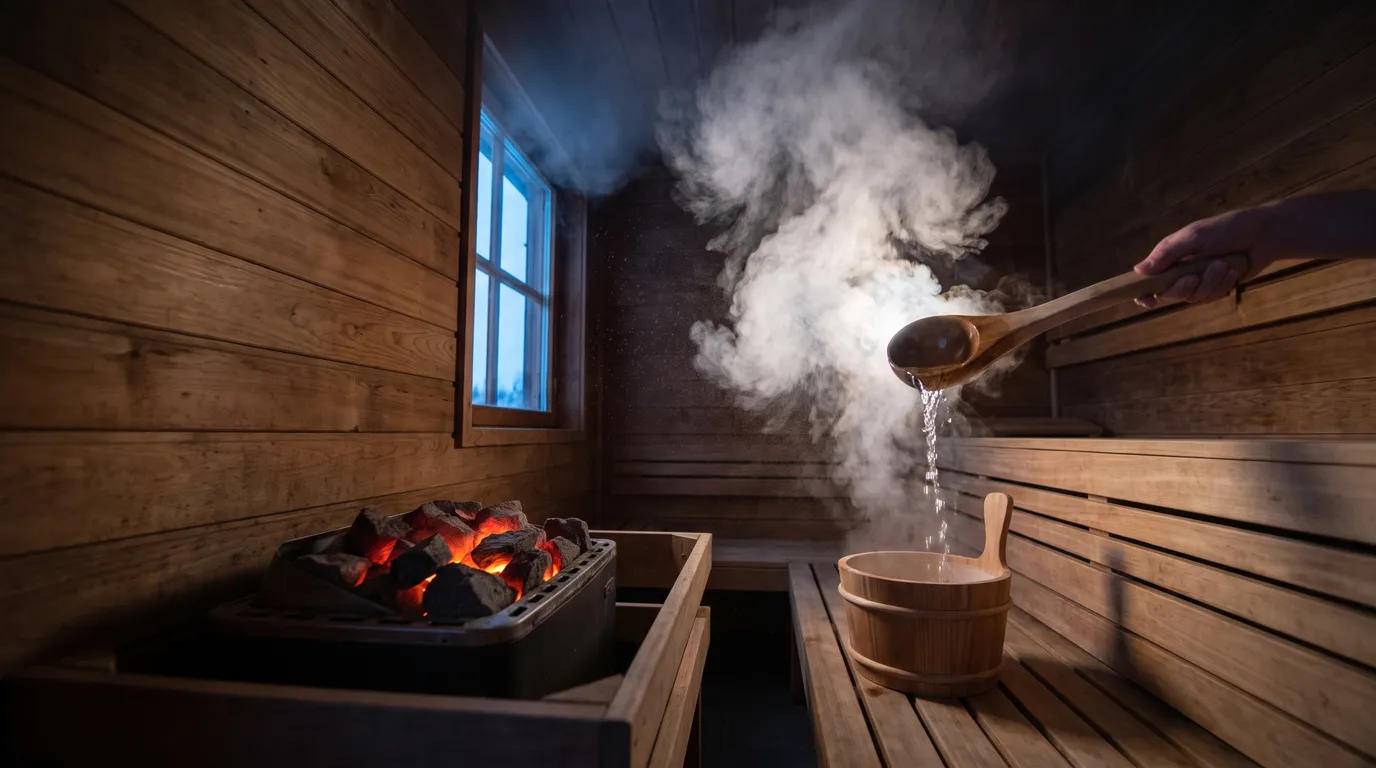
You know the feeling you are chasing; the question is whether it takes one room or two, and for most home buyers the honest answer is one. A traditional sauna is dry by default, and the same rock heater turns it humid the moment you pour water over the stones. So the two things being compared here are usually one product used two ways, and the decisions that actually cost money are the cabin and the heater, not the label on the page you are reading. Here is what changes when the water goes on, where a real steam room sits, and what the evidence base is actually built on. Some links below are affiliate links, they never change our ranking, see our disclosure.
Usually the same room, run two ways
Walk into a traditional sauna and you are in a wood lined room with a heater holding a pile of stones. Left alone, it runs hot and dry: 150 to 195°F, with humidity down at 10 to 20 percent. That is the dry sauna, and it is the default state of the room rather than a fixed limitation of it. Pour a ladle of water over those stones and the humidity climbs for a few minutes, the heat lands much harder, and then the room dries back out. Nothing about the cabin changed. You changed how you used it.
That is why the comparison people search for is not usually a comparison of two purchases. It is one purchase with a setting. What a full explainer of the dry format covers, what dry actually means and why it is the format the research sits on, is in the dry sauna guide, and the temperature bands for each type, with the beginner marks, are in the sauna temperature guide. The important thing to carry into a showroom is that a traditional cabin gives you both, and it only goes one way: a steam room cannot be run dry.
Side by side, dry mode, wet mode, and a real steam room
Two of these three columns are the same physical room. The third is a different building job. Reading it that way is the fastest route out of the confusion.
| What differs | Dry mode | Wet mode (löyly) | Steam room |
|---|---|---|---|
| Temperature | 150–195°F, run hot | The same 150–195°F room | 110–120°F, much cooler air |
| Humidity | 10–20%, dry air | A short humid burst, then dry again | ~100%, saturated throughout |
| How the heat feels | Sharp and dry, sweat evaporates freely | Heavier and enveloping for a few minutes | Wet throughout, sweat cannot evaporate |
| Equipment needed | A rock heater and the cabin | The same heater, a bucket and ladle | Plumbed generator, drain, sealed tiled room |
| Evidence base | 20 year Finnish cohort, traditional sauna | Same room, no separate cohort found | Thin, no equivalent cohort data |
| Typical session | 10–20 min | A burst inside the same session | 10–15 min |
Löyly, the switch that makes wet heat on demand
Löyly is the Finnish word for what happens when water hits hot stones: a rush of vapor into the room, humidity climbing sharply, and heat that suddenly feels far more intense than the thermometer says it should. The reason it feels that way is the same reason a steam room feels hotter than its reading. In dry air, sweat evaporates off your skin and that evaporation is doing the cooling. Load the air with moisture and evaporation slows, so the heat that was tolerable a moment ago is not. Then the room clears, the humidity drops, and you are back in a dry sauna.
The practical point is that it is the same heater doing all of it. There is no second appliance, no water line, no drain, and nothing extra on the electricity bill: the stones are hot because the heater was already running, and the water is water. Running cost is set by the heater size, how long you sit and what you pay per kilowatt hour, which is the calculation in our cost of ownership calculator rather than anything the ladle changes.
Two limits worth knowing before you plan around it. An infrared cabin has no stones, so löyly is not on the menu there at all. And how much water a given heater is built to take, along with how it should be poured, is something the manufacturer states in the manual for that specific model. That is the instruction to follow, not a general figure from us, because the right answer varies by heater and the consequences of the wrong one land on you rather than on a web page.
What people actually mean by a wet sauna
The phrase covers two different rooms, which is most of why the search is confusing. Usually it means a traditional sauna being run with water on the stones, the middle column above. Sometimes, especially at a gym or a hotel, it means the tiled room next door that is actually a steam room, which is a different appliance and a different build entirely.
Telling them apart takes one look. Wood benches, a wood interior and a heater with a visible pile of stones is a sauna, and it can be run dry or wet. Tile or acrylic walls, a glass door fogged from the inside, a bench you would not sit on with bare skin for long and no stones anywhere is a steam room. If the one you want is the tiled one, the honest head to head on cost, upkeep and install is the sauna vs steam room guide, and what steam itself is claimed to do, graded, is in steam room benefits. This page stops at the disambiguation, because those two cover it properly.
Does the water change the health case
Here is the part worth being careful about. The long term outcome data that gets quoted for saunas was collected in hot, traditional Finnish saunas. In a 20.7 year cohort of 2,315 Finnish men, frequent sauna use was associated with lower cardiovascular death (Laukkanen et al., JAMA Internal Medicine, 2015). That is an association from observational data, not proof that the heat caused the outcome, and the frequency of use is what it measured.
What it does not do is split those sessions into wet ones and dry ones, and we found no cohort that does. So a page telling you that humid heat is healthier than dry heat, or the reverse, is going past what anyone has actually measured. The physiological difference between the two is real and easy to feel, humid air stops your sweat evaporating and the same room becomes far more demanding, but a felt difference is not an outcome difference, and we are not going to pretend it is one. The deeper read on mechanism and evidence sits in the dry sauna guide. None of this is medical advice; talk to a doctor before starting if you have a heart condition or are pregnant.
Which one to buy, and what you actually need
If both modes matter to you, you are shopping for one thing: a traditional cabin with a rock heater. That single decision buys you the dry room and the humid one. The heater is the component that decides whether wet heat is even available and how fast the room recovers afterwards, so it deserves more attention than the cabin photograph does, and our best sauna heaters breakdown is the place to make that call. The interior wood matters too once you are pouring water in the room regularly, and which species suits that is covered in the best wood for a sauna guide.
After that, the wet mode costs you a bucket and a ladle. That is the whole conversion, and it is the cheapest upgrade in this entire category.

The Sweat Cabin (4 Person)
A traditional cabin, the room that runs dry by default and turns humid whenever you want it to. Add one of the rock heaters at checkout, since the from-price is the cabin without one, and it is the heater that makes both modes possible.
from $6,495 · $6,495–$9,995 across 8 options, choose on the product page
Made to order, 5-week lead time stated by the retailer. Price is for the unit and excludes delivery.

KOLO Bucket and Ladle
The entire wet mode conversion, in one accessory.
$136
Confirm stock and lead time with the retailer. Price is for the unit and excludes delivery.
What I'd tell a client. Nearly every version of this comparison I read frames these as two products, and then spends a thousand words helping you choose between them. My advisory read is simpler: it is usually one room used two ways, so the choice you are agonizing over is a choice you do not have to make. Buy the traditional cabin and the heater, keep a bucket next to it, and decide on the night. The people who genuinely face a decision here are the ones who want a real steam room, and that is a construction question rather than a preference question. Everyone else is choosing between two settings on something they were going to buy anyway.
Common questions
What is the difference between a wet and a dry sauna?
In most homes they are the same cabin. A traditional sauna runs dry at 150 to 195°F with 10 to 20 percent humidity, and water over the hot stones turns that same room humid for a few minutes. It is a mode you choose on the night, not usually a second purchase. A steam room is the genuinely separate thing.
Is a wet sauna the same as a steam room?
No, although the phrase gets used for both. A steam room holds near 100 percent humidity at a cooler 110 to 120°F and is a plumbed, tiled build. A wet sauna is normally a wood sauna with a rock heater, run with water on the stones. Tile, glass and no visible stones means steam room.
What is löyly?
The Finnish word for the burst of steam and heat that rises when water is poured over the hot stones. Humidity climbs, the heat feels far sharper for a few minutes because sweat can no longer evaporate freely, then the room dries back out. It is why one room can do both jobs.
Can any sauna be used wet?
No. It takes a heater with stones on top, which rules out an infrared cabin. Whether a specific heater is built to take water, and how, is stated by its manufacturer in the manual for that model, and that is the instruction to follow rather than a general rule from us.
Is wet or dry heat better for your health?
The long term evidence was collected in hot, traditional saunas: a 20.7 year Finnish cohort of 2,315 men, where frequent use was associated with lower cardiovascular death (PMID 25705824). An association, not proof of cause. We found no cohort separating wet sessions from dry ones, so a claim either way is ahead of the evidence. Not medical advice.
Does pouring water on the rocks cost more to run?
There is no second appliance behind it. The stones are hot because the heater is already running, so a humid session and a dry one are the same bill for the same heater. Your actual figure comes from heater size, session length and your electricity rate, which the cost of ownership calculator works out.
Sources & method
Evidence cited above: Laukkanen et al., JAMA Internal Medicine, 2015, a 20.7 year Finnish cohort of 2,315 men (cardiovascular death, hot traditional sauna) (PMID 25705824).
Temperature and humidity ranges are matched to what this site states elsewhere and are not measurements of our own. Steam room figures: 120°F is a regulatory ceiling where steam rooms are regulated (New York City Health Code 165.63(a), read 2026-08-26), the 110 to 120°F band is the Health and Fitness Association guideline, and 110°F is ThermaSol’s published setting and MrSteam’s factory default. Humidity near 100% rests on ThermaSol alone. No standards body publishes an operating range, only a cap, so treat these as the figures the industry works to rather than a specification.. Löyly is described here as a mode of a traditional sauna rather than a separate product. We publish no water quantities, heater settings or clearances: how much water a heater is built to take, and how it should be run, is stated by its manufacturer for your specific model and that takes precedence over anything general written here. Nothing on this page is medical advice.