Steam room benefits, honestly graded, and untangled from the dry sauna studies everyone borrows
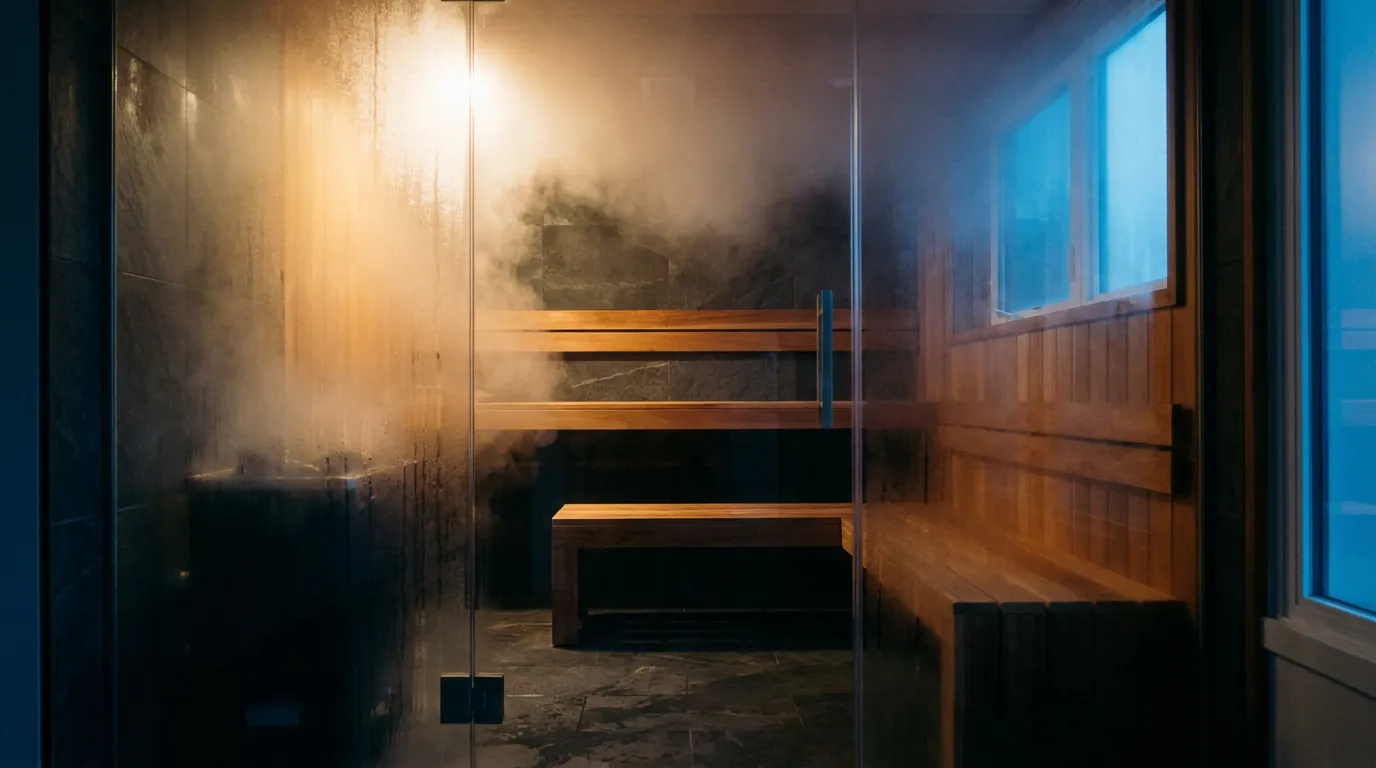
There’s a reason a hot, wet room feels like an instant reset. It opens a blocked nose, leaves your skin looking dewy, and forces you to sit still for fifteen minutes you would otherwise spend on your phone. As a wellbeing professional who has spent his career on stress and recovery, I want to give you the honest version before you spend anything, including the part most sellers skip: nearly every impressive number attached to steam room benefits online, white blood cells rising, a lower pneumonia signal, lower resting inflammation, comes from a dry, traditional Finnish sauna study. The immune cell finding, for one, is from a single dry sauna session (Pilch et al., J Human Kinetics, 2013), and it gets pinned on steam constantly. Some links on this page are affiliate links, they never change our recommendations, see our disclosure.
Why people crave the wet heat
The pull is straightforward. In cold and flu season, a few minutes of hot, saturated air can make a blocked nose feel clear again, at least while you’re in there. Step out and your skin looks and feels different, softer, a bit dewy, the closest thing to an instant glow most people get for free. And because you can’t really do anything else in a steam room, no phone, no scrolling, it is one of the few places left where you are forced to just sit and breathe. That combination, physical relief plus a genuine mental reset, is what people are actually buying when they say they want the steam room feeling. It’s a real experience. The question is which parts of it are backed by evidence, and which are just how a hot, wet room happens to feel.
The borrowed evidence problem
Search steam room benefits and you will find the same three findings recycled across dozens of sites: immune cells spike, pneumonia risk drops, inflammation markers fall. Read the actual papers and every one of them used a dry, traditional Finnish sauna, 65 to 90°C at 10 to 20% humidity, not a steam room at 40 to 46°C and 95 to 100% humidity. A single dry sauna session raised white blood cells, lymphocytes, neutrophils and basophils in a small human trial (Pilch et al., 2013, PMID 24511348). Frequent dry sauna use tracked with a lower pneumonia signal in a large cohort (Kunutsor et al., 2022, PMID 33797457). And regular dry sauna users carried lower resting CRP, 1.65 mg/L against 2.41 mg/L for once a week users, in the Finnish KIHD cohort (Laukkanen and Laukkanen, 2018, PMID 29209938). Genuine findings, properly cited, and every one of them about a room hotter and drier than the one most people mean when they say steam room.
What the evidence actually covers
Laid side by side, the gap is obvious. The dry sauna column has named trials and hard numbers behind three of these rows. The steam room column mostly does not, because almost nobody has run the equivalent trial in a steam room.
| Claimed benefit | Dry sauna evidence | Steam room evidence |
|---|---|---|
| Acute immune cell response | A single session raised white cell count, lymphocytes, neutrophils and basophils in a human trial (PMID 24511348). Measured in a dry sauna. | No steam specific trial has measured this. Sellers assume it carries over; nobody has tested it. |
| Pneumonia / infection risk | Frequent use tracked with a lower pneumonia signal in a large cohort (PMID 33797457). Dry sauna cohort. | Not studied in a steam room population. |
| Resting inflammation (CRP) | 1.65 mg/L at 4 to 7 sessions a week versus 2.41 mg/L at once a week, Finnish KIHD cohort (PMID 29209938). Dry sauna users. | No published steam specific inflammation data. |
| Airway & congestion comfort | Not the mechanism studied; dry, low humidity air does not carry this effect. | Plausible: moist heat loosens mucus while you are in the room. No controlled steam trial measures how long relief lasts. |
| Skin hydration / glow | Not applicable; dry heat does not humidify skin the same way. | Genuine, temporary surface hydration. No evidence of a lasting change once you towel off. |
| Relaxation & wind down | Reported widely alongside the immune and inflammation findings above. | Same generic heat relaxation response. No steam specific trial isolates it from just sitting still and breathing. |
Where those three numbers actually come from
One source, one room type, three outcomes. Every arrow below starts in a dry sauna.
What steam specifically might do, plausible, not proven
Individual Airway and congestion comfort. Moist heat loosens mucus and eases the stuffy feeling of a cold or blocked sinuses while you are in the room and for a short while after. Real and immediate by report, but no rigorous steam room trial measures how long it lasts.
Individual Skin hydration and glow. Humidity plumps the surface of your skin, which is why you look dewy stepping out. Visible and genuine, and completely temporary; it fades once you towel off and your skin re-equilibrates. No evidence of a lasting change to skin health.
Traditional Relaxation and wind down. Heat plus humidity is a real sensory reset; most people report feeling calmer and less tense afterward. Plausible and widely reported, in the same family as the relaxation effect from a dry sauna, but no trial isolates steam as doing this better.

Risks and hygiene, the part sellers skip
A steam room’s whole appeal, hot and wet, is also its biggest risk if it isn’t kept clean. Standing water, warm surfaces and high humidity are exactly the conditions mold and bacteria need, especially in a poorly ventilated or infrequently cleaned room; shared and public steam rooms are the highest risk setting. At home that means drying and ventilating the room between uses and checking it, not just running it. On the medical side, heat and humidity load your heart and blood pressure much like a hot sauna, so anyone with cardiovascular disease, high or low blood pressure, or who is pregnant should get medical advice before regular use, and some people with asthma find humid heat triggers symptoms rather than easing them, worth testing cautiously rather than assuming it will help. Never use one alone as a beginner or after alcohol, and get out if you feel dizzy or unwell. This is general information, not medical advice.
Getting steam benefits at home, without building a steam room
A dedicated home steam room is a plumbing and waterproofing project as much as a wellness purchase, a steam generator, a fully sealed and sloped enclosure, and an ongoing cleaning routine to stop it becoming the mold risk above. Built properly, that commonly runs $5,000 to $20,000 or more once you price the generator, waterproofing and tile labor (typical US planning estimates, not contractor quotes, get a local quote before committing; full breakdown in our home sauna cost guide). A traditional sauna, by contrast, is a delivered, pre-built unit, commonly $2,500 to $15,000 all in, and it gets you most of what people actually want from steam. Pour water on the hot rocks and you get a real burst of humidity and heat, called löyly, without a steam generator, a sealed shower pan, or the standing water mold risk, and it carries the dry heat evidence covered above. If a truly cheap steam fix is all you want to test the idea, a portable steam pod is under $200, see our portable sauna picks, but it won’t match a real cabin for heat or durability.
The evidence backed way to get it
A traditional cedar cabin, delivered rather than built as a construction project, that gives you a genuine steam burst whenever you pour water on the rocks. Price it honestly: the from-price is the cabin, the heater and its rocks are chosen at checkout, and the 240V circuit is an electrician on top.

The Sweat Cabin (4 Person)
The evidence backed alternative that still gives you steam: pour water on the rocks for löyly, no plumbed steam room required.
from $6,495 · $6,495–$9,995 across 8 options, choose on the product page
Made to order, 5-week lead time stated by the retailer. Price is for the unit and excludes delivery.
Whatever wet heat setup you run, the hygiene risk above only bites when humidity sits high for too long. A hygrometer tells you that instead of guessing.

Saunalife Hygrometer
A simple humidity gauge, so you know when to ventilate instead of leaving mold friendly conditions to chance.
$45
Confirm stock and lead time with the retailer. Price is for the unit and excludes delivery.
My advisory take
Steam’s benefits are experiential, real, immediate, and worth having, but they are short term: a clearer nose, softer skin for an hour, a genuine sense of calm. The dry sauna findings with named studies behind them, immune cells, pneumonia signal, inflammation, were never measured in a steam room, and no seller should tell you otherwise. My advice to a client weighing the two is simple: buy steam for how it feels today, buy a traditional sauna if you want the researched dry heat data to be part of the reason. Used with water on the rocks, a traditional sauna is honestly the sensible middle, most of the steam feeling, all of the researched heat.
Common questions
What are the benefits of a steam room?
Short term: easier breathing and looser congestion while you’re in it, a temporary skin glow, and real relaxation from the heat. All genuine, all short lived. The bigger numbers you see quoted online come from dry sauna studies, not steam room studies.
Is the sauna health research the same as steam room research?
No. The immune cell rise (PMID 24511348), the pneumonia signal (PMID 33797457) and the lower CRP finding (PMID 29209938) are all dry sauna studies. No comparable steam room outcome study exists.
Is a steam sauna good for your skin?
It gives a temporary hydration boost and a visible glow right after. It fades once you towel off and rehydrate; there’s no evidence of a lasting skin health change.
Is a steam room bad for you?
Fine for most healthy adults used sensibly. A poorly kept one is a real mold and bacteria risk, and anyone with heart or blood pressure issues, or who is pregnant, should check with a doctor first.
How do I get steam benefits at home without a steam room?
A traditional sauna with water on the hot rocks (löyly) gives real steam without a generator or waterproofed room, at a fraction of the cost and mold risk, and it carries the dry heat evidence covered above.
Sources & method
Evidence cited above: Pilch et al., J Human Kinetics, 2013, a single dry sauna session, not steam (PMID 24511348); Kunutsor et al., J Cardiopulm Rehabil Prev, 2022, a frequent dry sauna cohort, not steam (PMID 33797457); Laukkanen and Laukkanen, Eur J Epidemiology, 2018, the Finnish KIHD dry sauna cohort, not steam (PMID 29209938).
Steam room temperature and humidity, about 40 to 46°C at 95 to 100% humidity, versus the traditional Finnish dry sauna at 65 to 90°C and 10 to 20% humidity, are the accepted standards for each format. All three studies above used a dry, traditional sauna; no comparable outcome study exists for steam rooms specifically. Steam specific claims (airway comfort, skin, relaxation) are graded on physiological plausibility and the thinness of the direct evidence base, not on a trial. Cost figures are typical US planning estimates, not contractor quotes. This is general information, not medical advice; consult a doctor before regular steam or sauna use if you have a cardiovascular condition, high or low blood pressure, or are pregnant.