Red light sauna: two different products wearing one search term
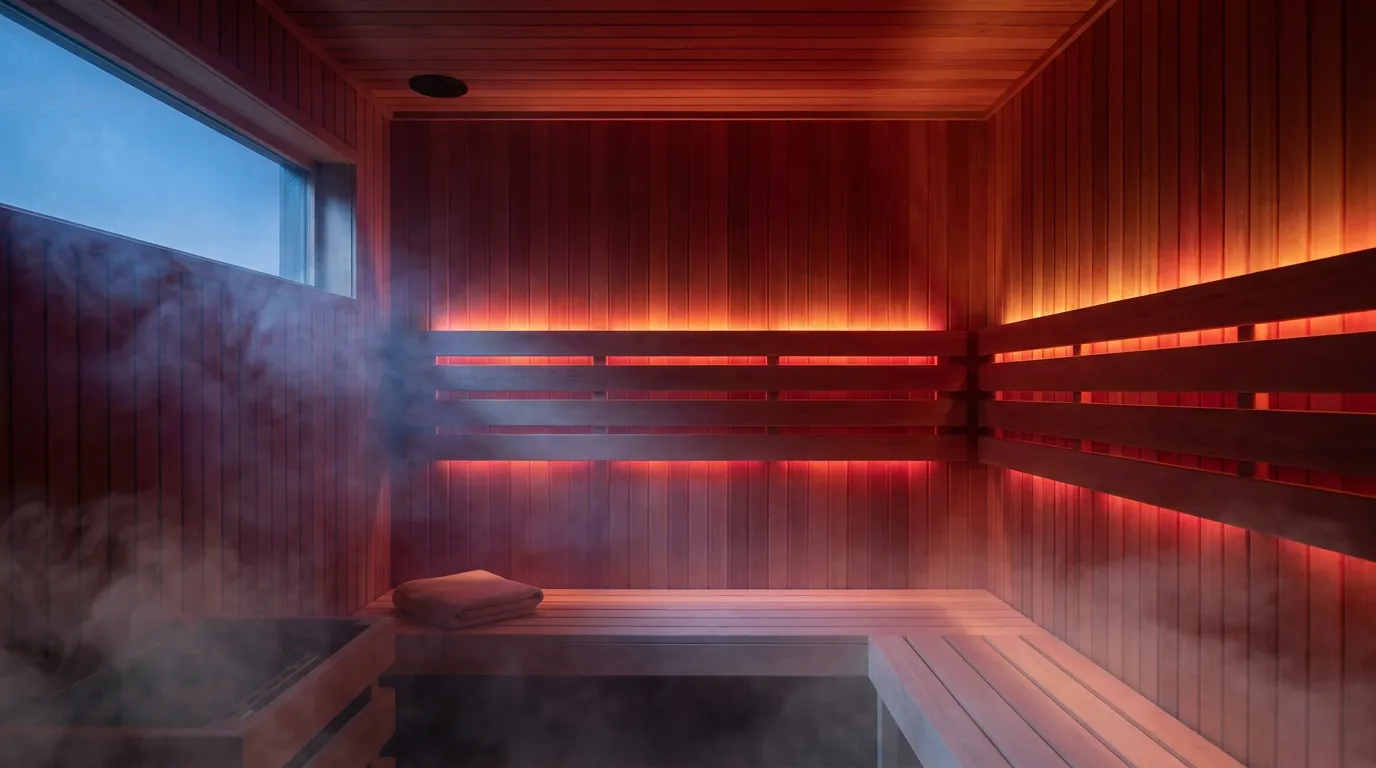
As a wellbeing advisor, "red light sauna" is one of the most confused searches I see clients type, and the confusion is not an accident. Sellers benefit when you assume a red LED glow means the health effects of an infrared sauna and the health effects of a red light therapy panel come bundled in one box. They do not. One is a heat device that warms your whole body with far infrared radiation. The other is a light device that shines visible red and near infrared light on your skin without meaningfully heating you at all. This guide separates the two honestly, grades the claims for each, and tells you what we would actually spend money on first. Some links below are affiliate links, they never change what I recommend, see our disclosure.
Two products, one glowing word
An infrared sauna is a heat cabin. Ceramic or carbon far infrared panels warm your body directly, the air stays a gentler 120 to 150°F, and you sweat the same way you would in any sauna, just at a lower temperature. That is the product covered in our infrared sauna benefits guide and compared head to head with traditional saunas in our infrared versus traditional guide.
Red light therapy, sometimes called photobiomodulation or low-level light therapy, is a different device entirely. A dedicated red light panel does not warm the air or raise your core temperature in any meaningful way, it sits close to bare skin and delivers visible red and near infrared photons that cells absorb at the mitochondrial level. No sweating, no elevated heart rate, no heat adaptation, a completely different mechanism aimed at skin and tissue rather than your whole-body thermal system.
The two get bundled in search because they share a word, "red", and because some infrared cabins now ship with a red LED strip built in. That does not make them the same product, or the same evidence base, and it does not mean one purchase buys you both sets of benefits.
The overlap in marketing language is bigger than the overlap in what the devices actually do.
Mechanism versus outcome, side by side
The clearest way to see that these are two different purchases is to put them next to each other. Same glowing red marketing, almost nothing else in common.
| Red light therapy (photobiomodulation) | Infrared sauna | |
|---|---|---|
| What it is | Visible red and near infrared LED light on bare skin; the panel stays cool | Broadband far infrared heaters warming your whole body |
| Mechanism | Cytochrome c oxidase and ATP inside cells (photochemical), not heat | Thermal: raises your core temperature, heat stress |
| Wavelength / heat | 630nm, 660nm, 850nm; no meaningful heating | 40 to 60°C air, you sweat |
| Body response | No sweating, no core-temperature rise, no heart-rate lift | Sweating, raised heart rate, heat adaptation |
| Best evidence | Sport recovery: reduced muscle fatigue and creatine kinase in volleyball and football players, but no gain in maximum force (Qiu 2026) | Cardiovascular: far infrared Waon therapy improved heart-failure outcomes (Tei 2016); shares physiology with the 20 year Finnish sauna cohort |
| Buy it for | An optional skin or muscle add-on, on thinner evidence | The proven habit: heat, sweat, relaxation, recovery |
What the evidence actually supports, graded honestly
For sauna heat, we have real ground to stand on. A 20.7 year Finnish cohort of 2,315 men found that those using a sauna 4 to 7 times a week had a 63 percent lower risk of sudden cardiac death and roughly 40 percent lower all-cause mortality than those using one once a week, with a clear dose-response pattern (Laukkanen et al., JAMA Internal Medicine, 2015). That is traditional-sauna data, associational rather than proof of cause, and infrared shares the physiology at a gentler temperature without its own multi-decade cohort, we cover that gap fully in the benefits guide. Still, it is a real, large, long-run human dataset behind heat exposure.
Red light therapy has a thinner, narrower base. The best recent evidence is a 2026 meta-analysis of photobiomodulation in volleyball and football players, which found it delayed muscle fatigue and lowered creatine kinase, a marker of muscle damage, but did not improve maximum voluntary force (Qiu et al., Sports Health, 2026). That is a genuine finding in a specific athletic population, not a whole-body health claim, and the wider claims made for red light, skin appearance, collagen, general recovery, remain an active area of research rather than settled fact. The honest summary: treat red light therapy as early-stage and promising, strongest for sport recovery, and be skeptical of any seller who states the broader benefits as proven.

What "infrared sauna with red light" combo cabins really include
Several infrared cabins now ship with a red LED strip built into the ceiling or backrest, marketed as "infrared sauna with red light" or "red light therapy sauna." Here is the honest read on what you are getting. The infrared heating panels are the real, full-strength product, the same far infrared heat covered in our benefits guide. The red LED strip is typically a low diode count ambience light, built to look good and add a warm glow to the cabin, not to match the diode density, irradiance, or close skin distance that a dedicated red light therapy panel is designed to deliver.
That does not make the LED strip worthless, it is a genuine, pleasant extra that some people enjoy sitting under during a sauna session. It does mean you should not pay a large premium for a combo cabin specifically expecting clinical-grade red light therapy results. If dedicated red light therapy is the primary reason you are buying, a purpose-built panel used on its own, close to skin, for its own session, is the more honest way to actually get that exposure.
The Sweat Kingdom light kit, framed honestly
This is a universal LED strip you add to a sauna cabin for ambience, a warm glow while you sit and sweat. It is not a red light therapy device, and we are not selling it as one. If you already have or are buying an infrared cabin and want the mood lighting, it is an inexpensive, honest add-on. If you are shopping specifically for red light therapy benefits, look at a dedicated therapy panel instead.

Universal Sauna Light Kit with 16-Ft Flexible LED Strip
A flexible LED strip for cabin ambience, not a red light therapy panel.
$349
In stock. Price is for the unit and excludes delivery.
What we would actually buy, and in what order
Buy the infrared sauna first. It is the device with the deeper mechanism, the shared physiology with the strongest sauna research we have, and the habit most people will actually keep, several nights a week for stress, sleep and recovery. Start with the best infrared saunas and pick a cabin on its heat, EMF and build quality, not on whether it happens to have a red LED strip.
Red light comes second, and only if you specifically want to try photobiomodulation on its own merits. Do not pay a large combo-cabin premium assuming it replaces a dedicated panel, and do not let a glowing marketing photo be the deciding factor between two otherwise similar saunas.
What I tell clients weighing this
As a wellbeing advisor, the spending order I actually recommend is small first, big second. A modest LED light kit is a low-risk way to add a nicer sauna experience once you own a cabin, it is not a decision that needs agonizing over. A combo cabin carrying a few thousand dollars of premium specifically for a built-in red light feature is a much bigger bet on a claim with far thinner evidence than the heat itself. Spend the small, honest amount on the light first if you want it, and put the real money into the sauna that has the research behind it.
Common questions
Is red light the same as infrared?
No. Red light therapy uses visible red and near infrared LEDs aimed at skin and cells, no meaningful heating. An infrared sauna uses far infrared heat to warm your whole body. Different wavelengths, different mechanisms, different devices.
Do you need both an infrared sauna and a red light panel?
No. Buy the infrared sauna for the proven sauna benefits and habit. Add a dedicated red light panel later, only if you specifically want to try photobiomodulation, which sits on thinner, sport-specific evidence than sauna heat.
What does the LED strip in a combo infrared sauna actually do?
Usually a low-diode-count ambience light, not a clinical-strength red light therapy panel. A nice extra, not a reason to pay a large premium.
Sources & method
Evidence cited above: Laukkanen et al., JAMA Internal Medicine, 2015 (traditional Finnish sauna, cardiovascular) (PMID 25705824); Qiu et al., Sports Health, 2026 (photobiomodulation meta-analysis in volleyball and football players) (PMID 40995827); Tei et al., Circulation Journal, 2016 (WAON-CHF, far infrared therapy in heart failure) (PMID 27001189).
Sauna cardiovascular figures cite a study of traditional Finnish saunas, included to be explicit about the depth of evidence behind heat exposure specifically, not red light. The red light citation is scoped to athletes; wider red light claims are described as early-stage rather than proven. Wavelength figures describe general light and infrared physics, not a clinical claim. Product details reflect the Sweat Kingdom catalog, current July 2026. Nothing here is medical advice.